The Typeahead Suggestion System
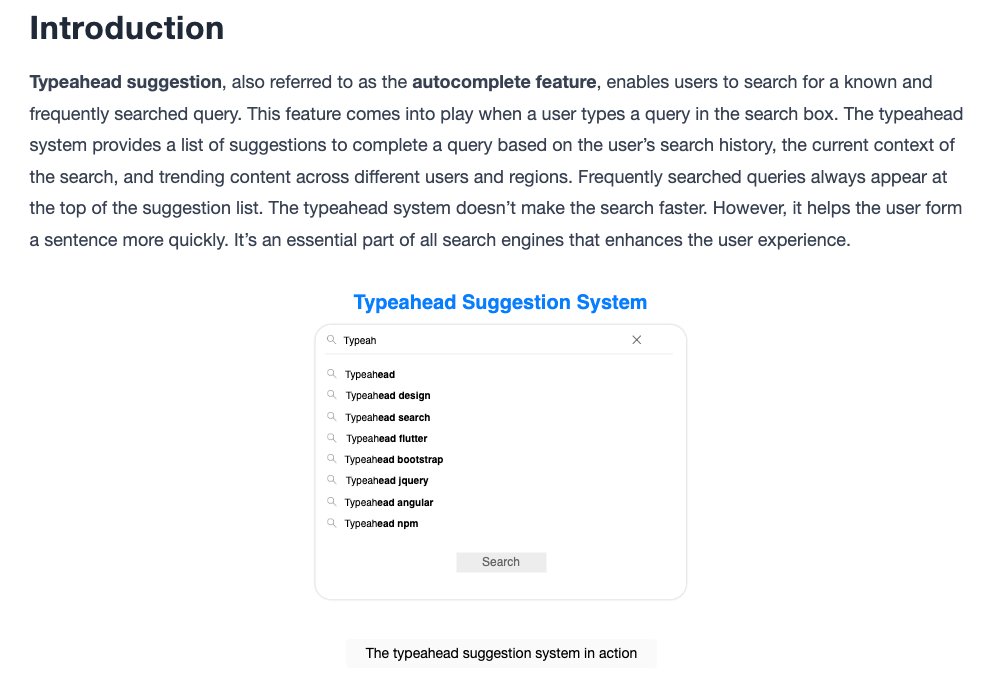
What is The Typeahead Suggestion System?
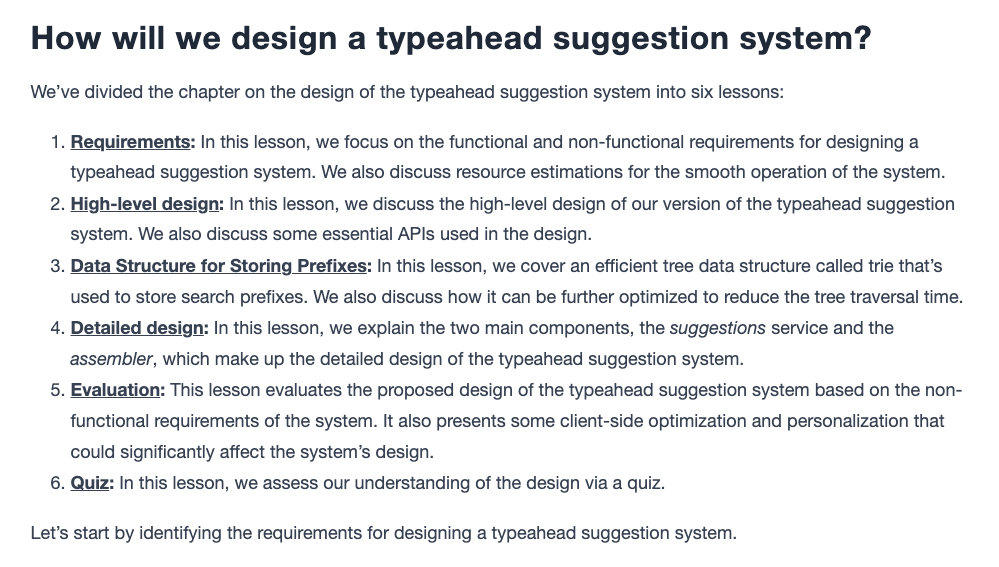
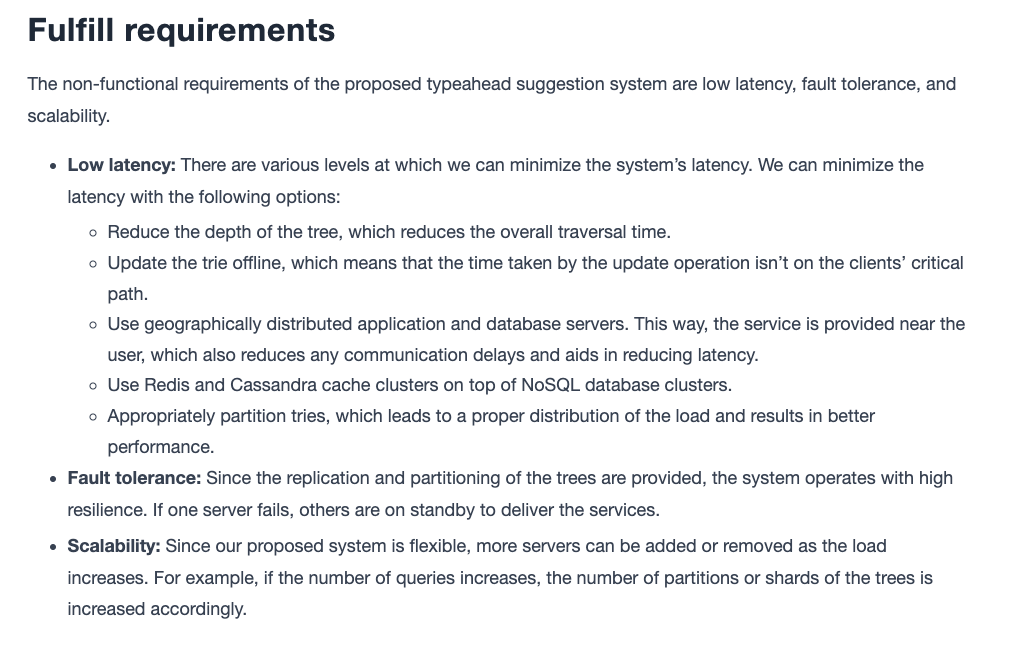
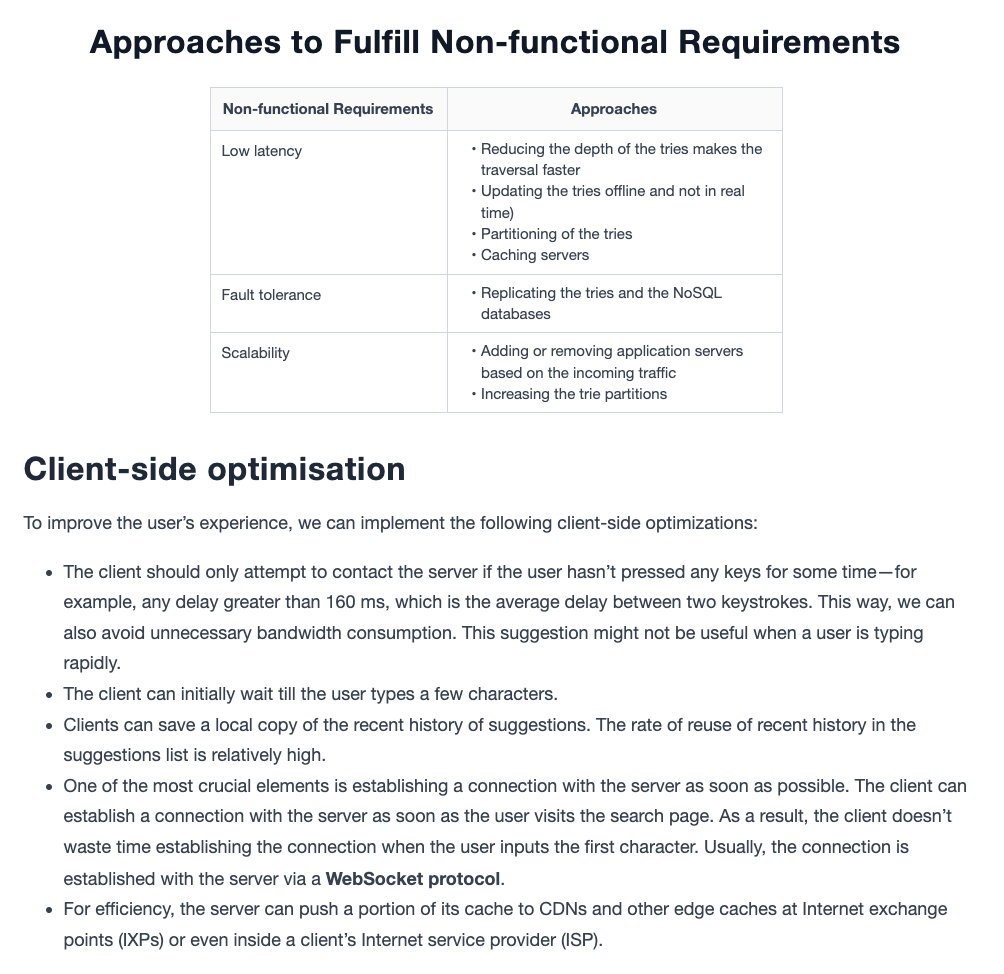
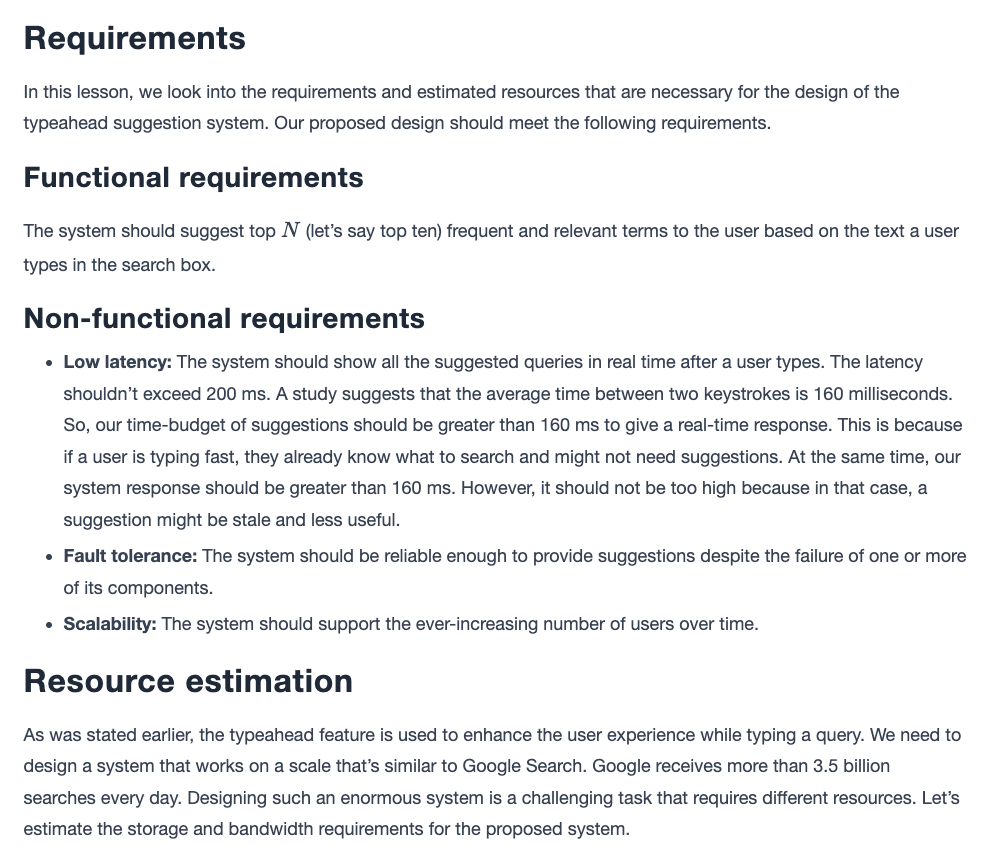
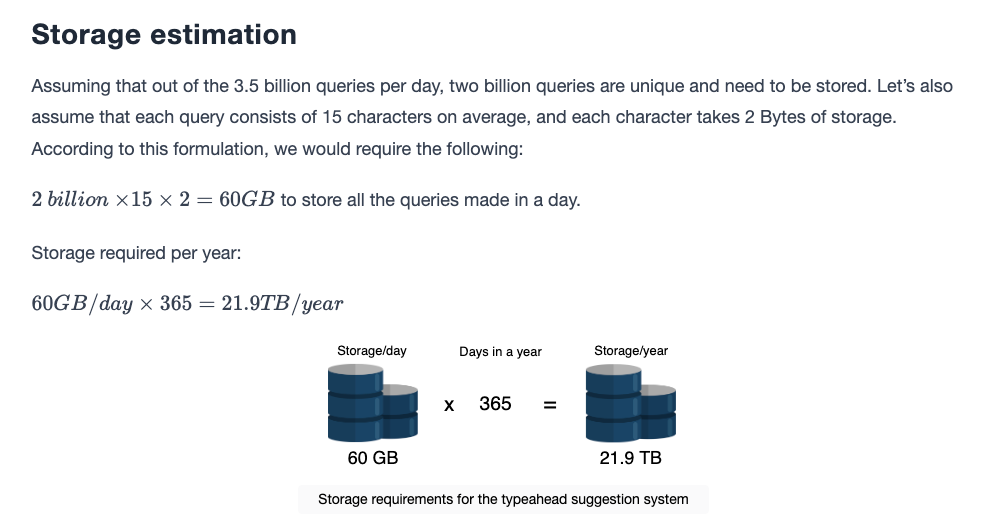
Requirements of the Typeahead Suggestion System’s Design
High-level Design of the Typeahead Suggestion System
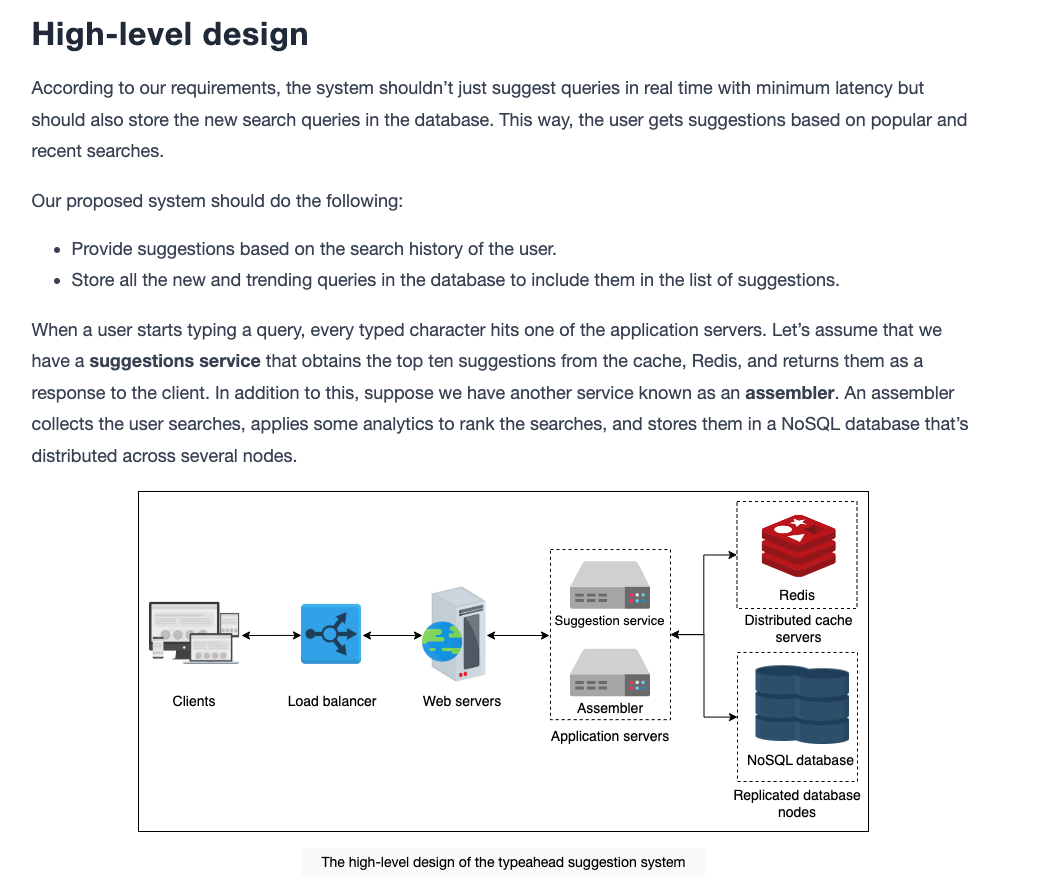
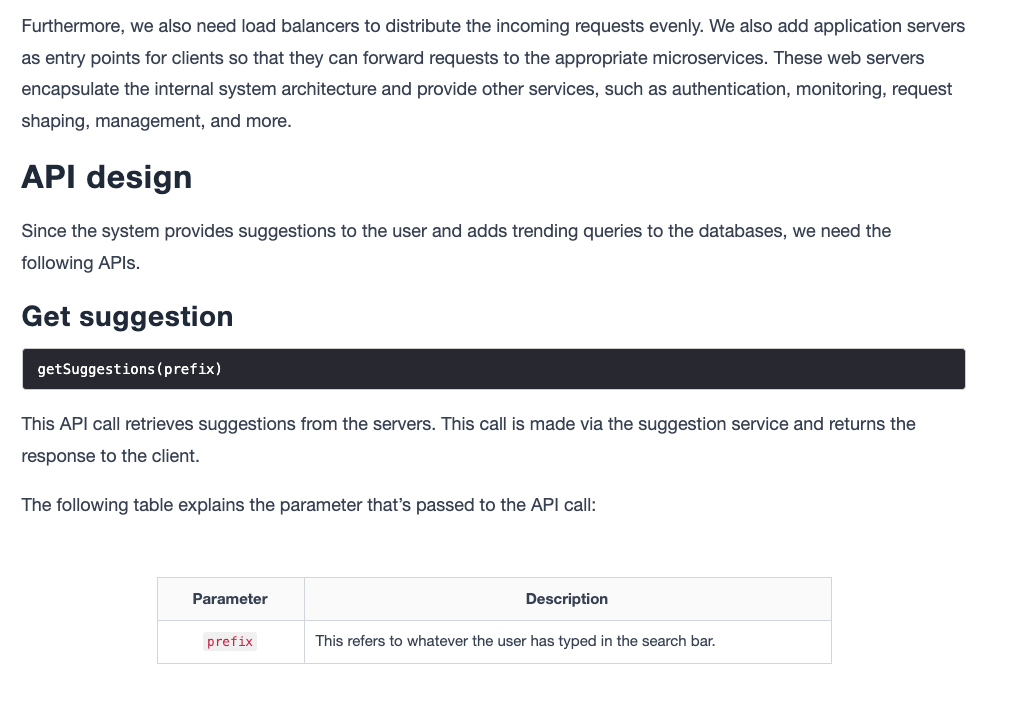
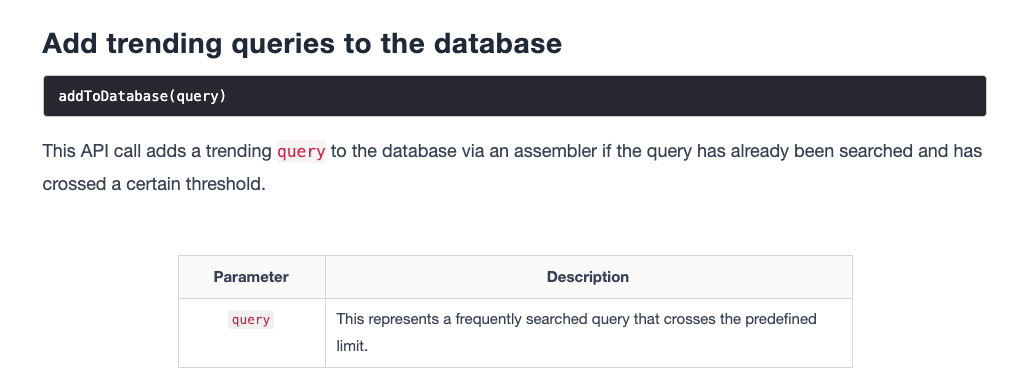
Instead of updating the whole page, we just need to update the suggested query in the search box in real time. What technique can we use for this purpose?


Details
When our typeahead system needs to support multiple languages simultaneously, several potential bottlenecks could arise in the current high-level design. These include:
-
Language-specific nuances: Different languages have unique structures, grammar, vocabulary, and character sets. The current design may not handle these differences efficiently, leading to inaccurate or irrelevant suggestions.
-
Character sets: The current design might not support all character sets used by the supported languages, which could lead to incorrect or missing suggestions.
-
Load balancing: The current design may not distribute the load evenly between different languages and assumes a relatively uniform distribution of prefixes across the alphabet. This could lead to slower response times for some languages or an imbalance in the load across servers.
-
Data storage and retrieval: The current design may not store and retrieve data in multiple languages efficiently, which could lead to slower response times and increased storage costs. The trie data structure may not be the most efficient for all languages.
-
Ranking of suggestions: The current design ranks suggestions based on their frequency. However, the frequency of a term can vary greatly between languages, leading to inaccurate rankings.
To solve these potential bottlenecks, we could:
-
Implement language-specific algorithms and data structures: We could develop and implement algorithms and data structures that take into account the nuances of each supported language. This could improve the accuracy and relevance of the suggestions.
-
Support all character sets: We should ensure that our system supports all character sets used by the supported languages. This could prevent incorrect or missing suggestions.
-
Improve load balancing: We could improve our load balancing algorithms to ensure that the load is evenly distributed between different languages. This could prevent slower response times for some languages.
-
Optimize data storage and retrieval: We could optimize our data storage and retrieval methods for multiple languages. This could improve response times and reduce storage costs. We could use more efficient data structures for languages with a large number of characters.
Implement language-specific ranking: We could maintain separate ranking systems for different languages. This would ensure that the suggestions are relevant to the users of each language.
Data Structure for Storing Prefixes
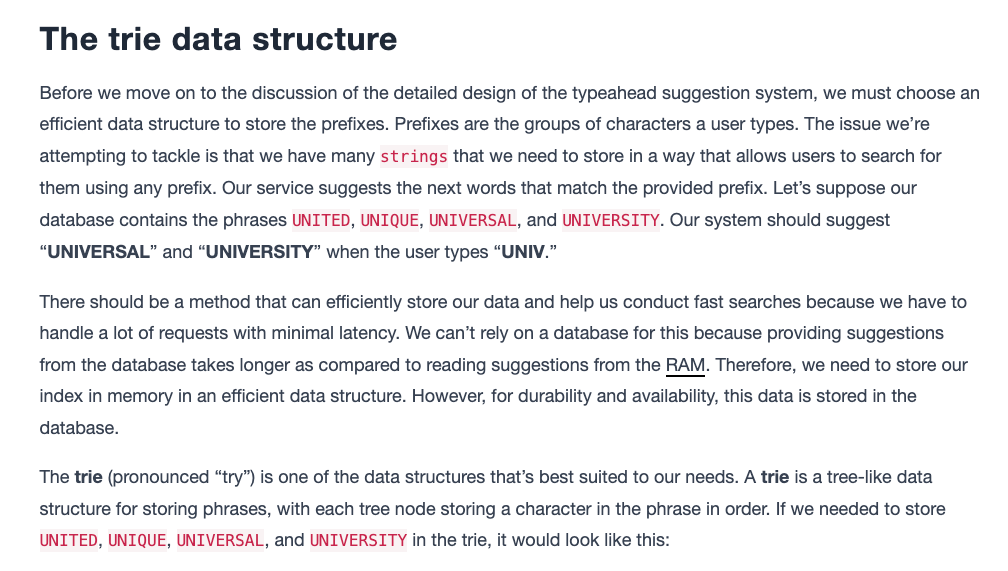
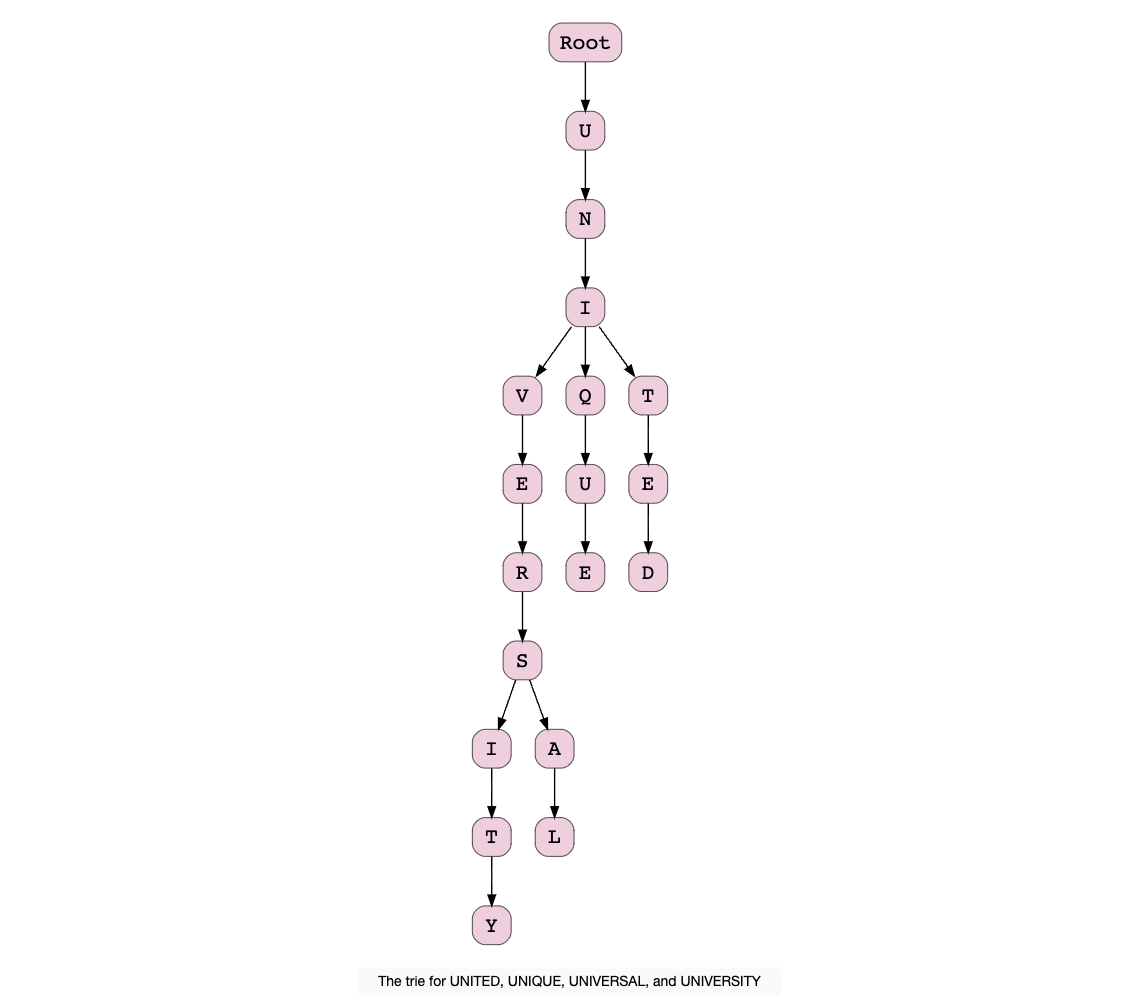
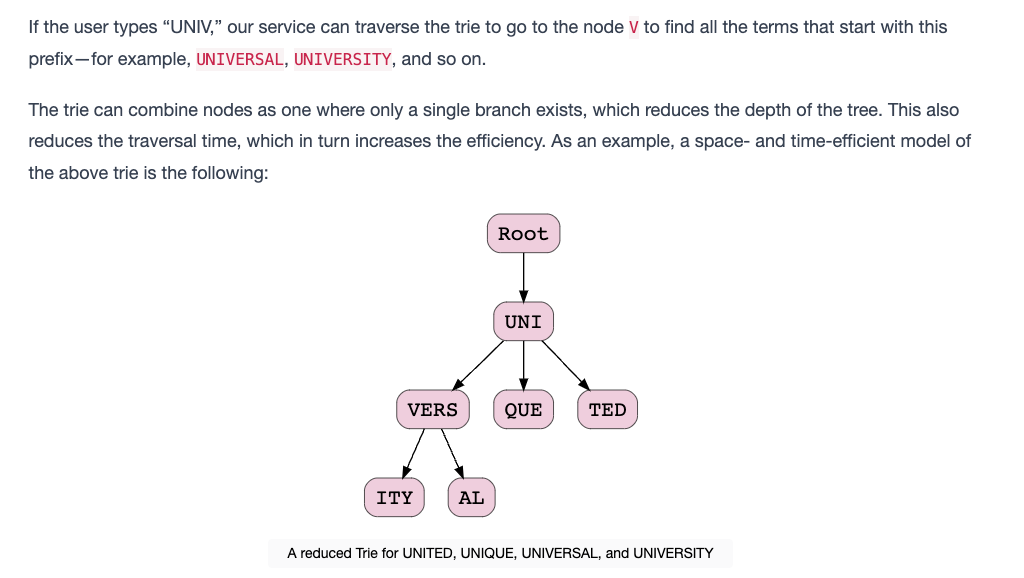
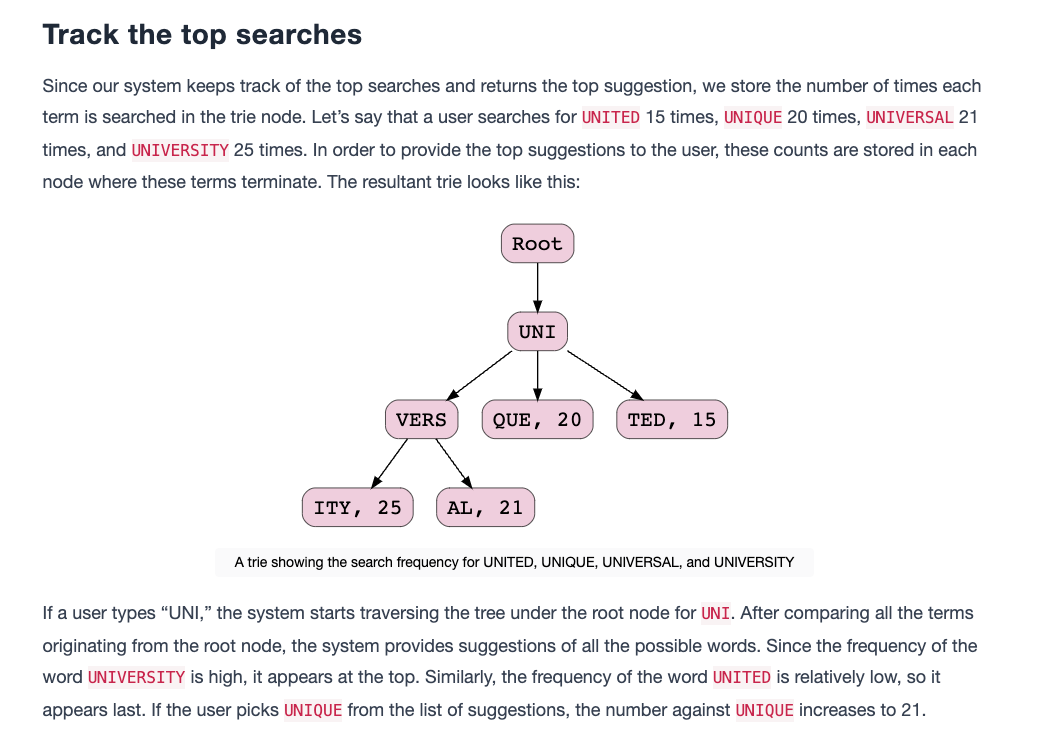
We reduced the time to traverse the trie by combining nodes with single branches and reducing the number of levels. Is there any other way to minimize the trie traversal time?
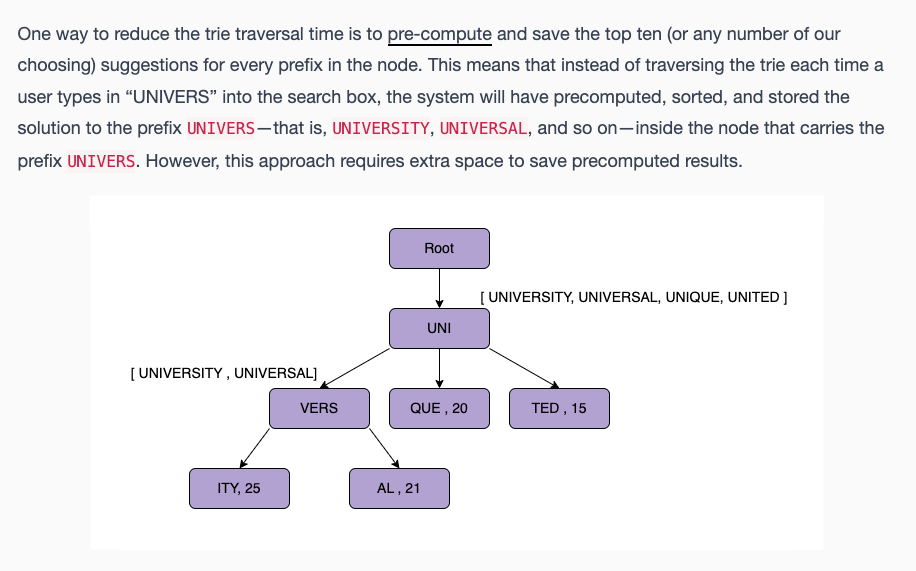
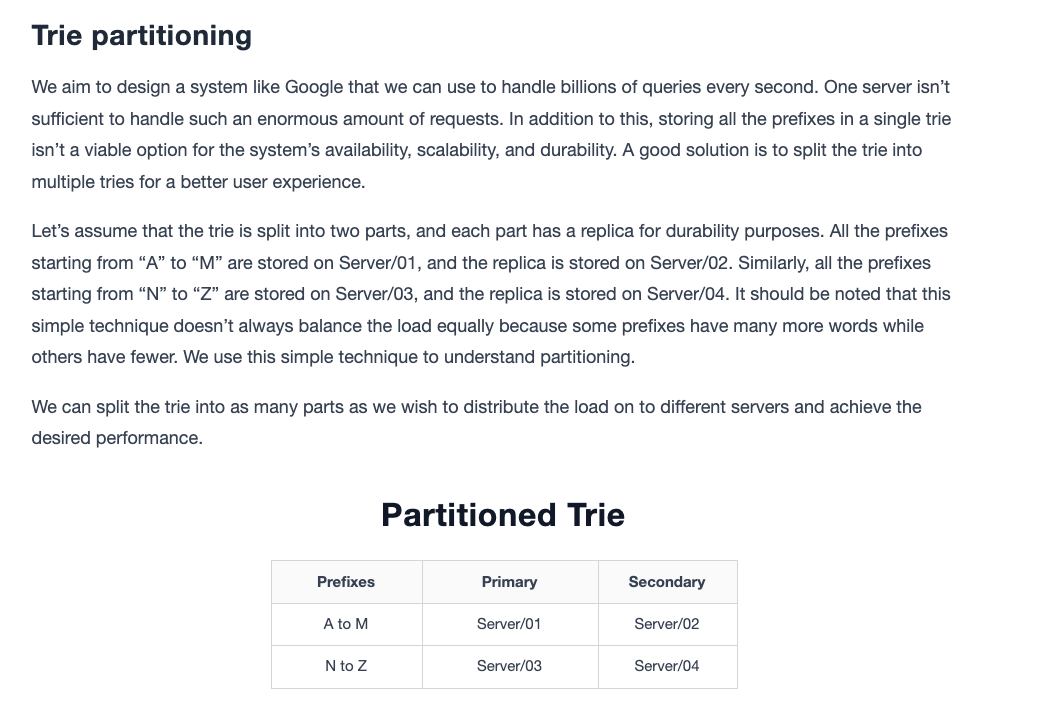
Where will the mapping between the prefixes and their primary and secondary storage be stored? Who will manage and direct the requests to these servers?
In a distributed system where multiple clusters consisting of several servers can be used for a specific service, we use a cluster manager like ZooKeeper to store the mapping between clusters.
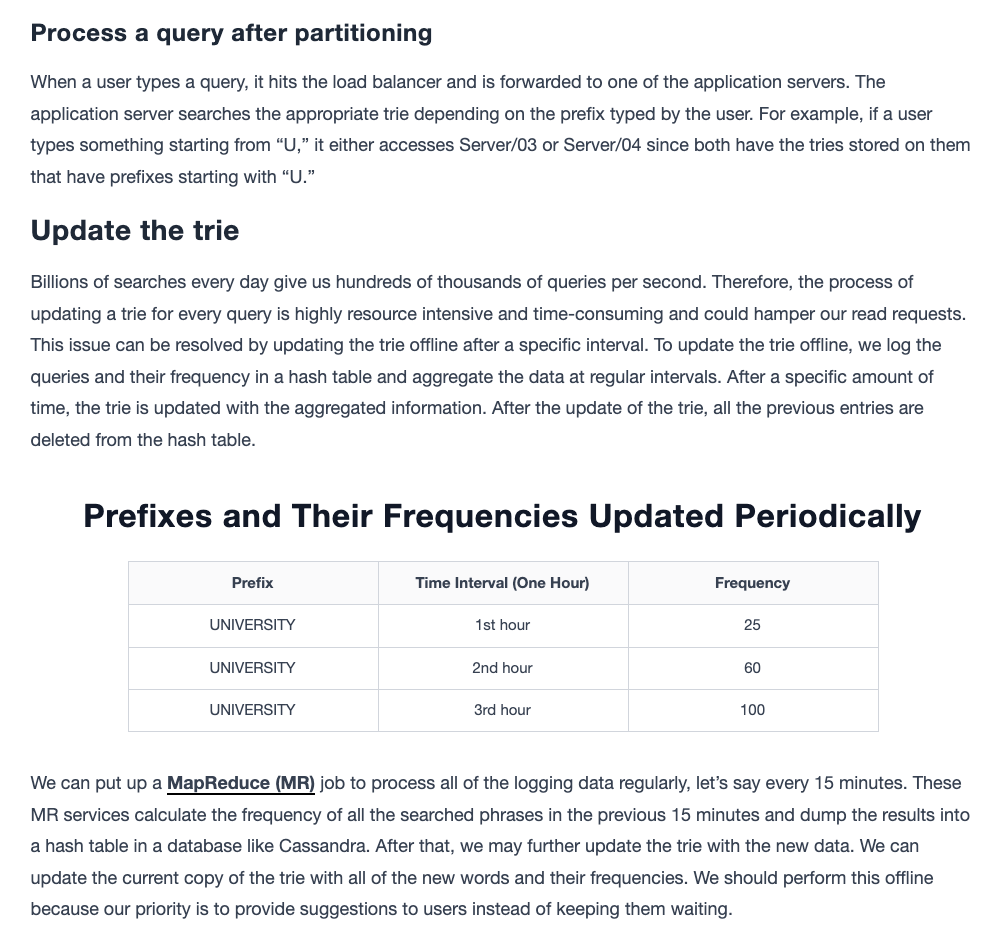
If the prefix frequencies keep increasing over time, the corresponding integers storing them can overflow. How can we manage this issue?
We can normalize frequencies by mapping them in a range, let’s say between zero and 1,000. Alternatively, we can stop any further additions after a certain threshold is reached, assuming that any prefix reaching that threshold is at the top of the rankings.
Detailed Design of the Typeahead Suggestion System
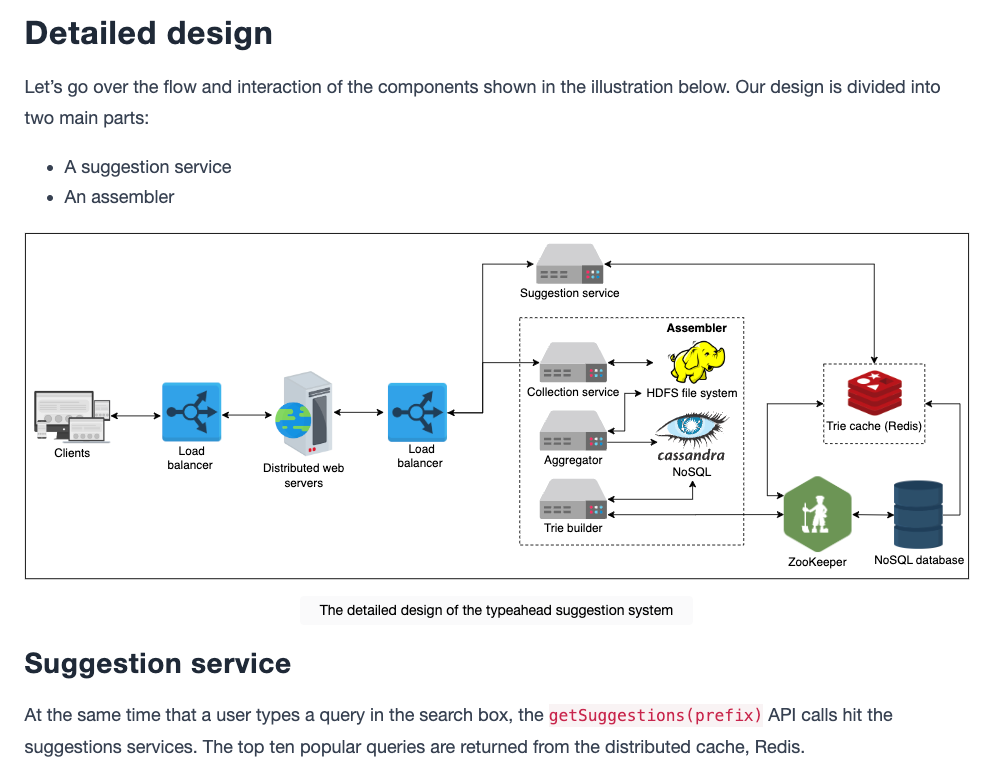
Details
To handle misspelled or incomplete words in the typeahead, you can use several strategies.
- Fuzzy Matching: This technique is used to find matches that are less than perfect. It helps in finding matches even when the words are misspelled or incomplete.
- Autocorrect: This feature automatically corrects the spelling of words that are misspelled. It’s based on a dictionary of words and their correct spelling.
- Predictive Text: This feature predicts the rest of the word a user is typing, making it easier to complete words that are partially typed.
- Contextual Suggestions: This feature provides suggestions based on the context of the word being typed. It helps in completing the words and also in providing relevant suggestions.
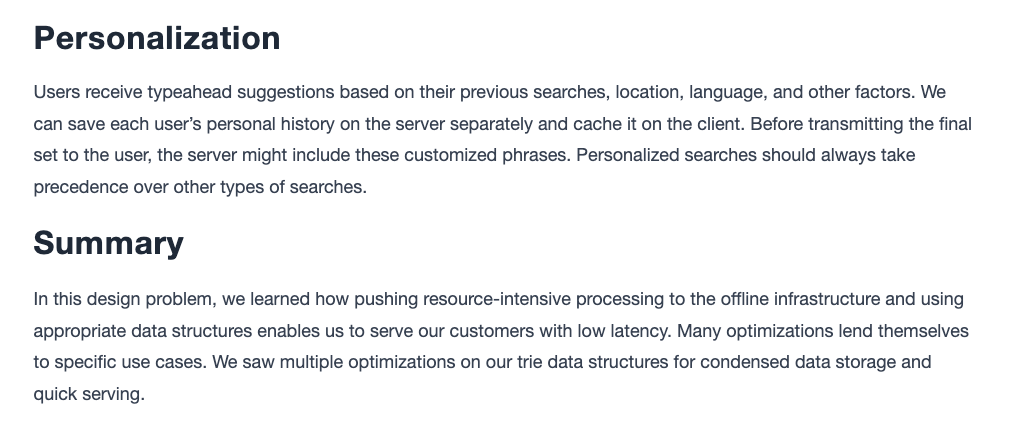
Should we collect data and build a trie per user, or should it be shared among all users?
Evaluation of the Typeahead Suggestion System’s Design