Yelp
What is it?
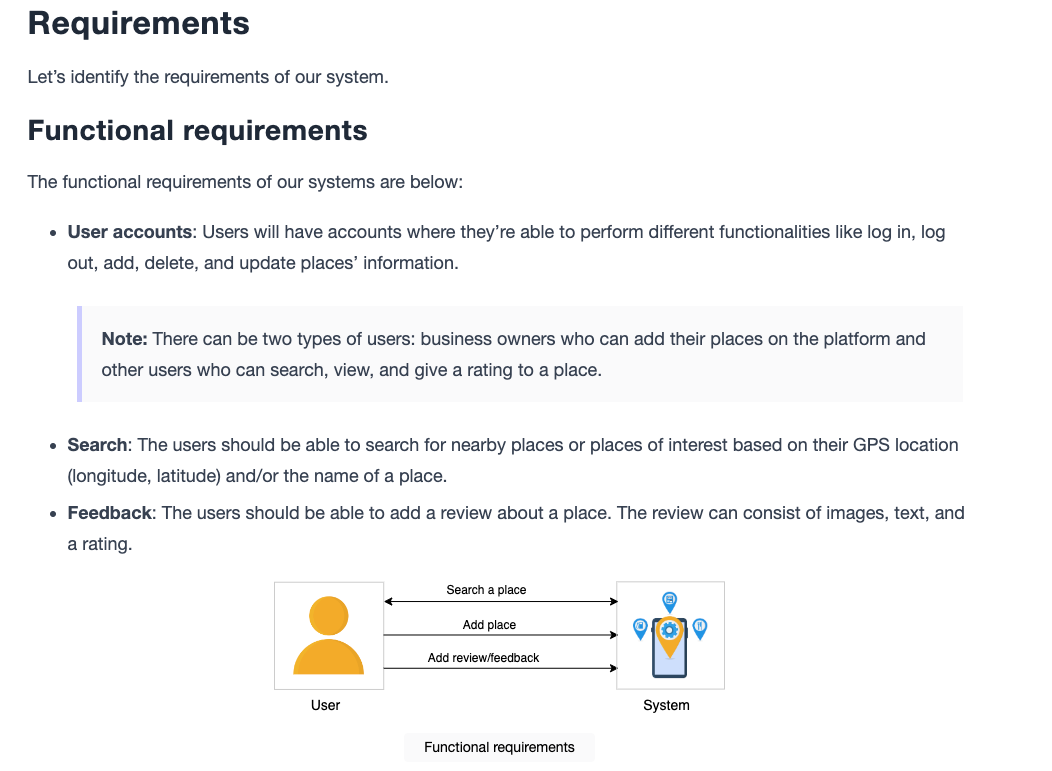
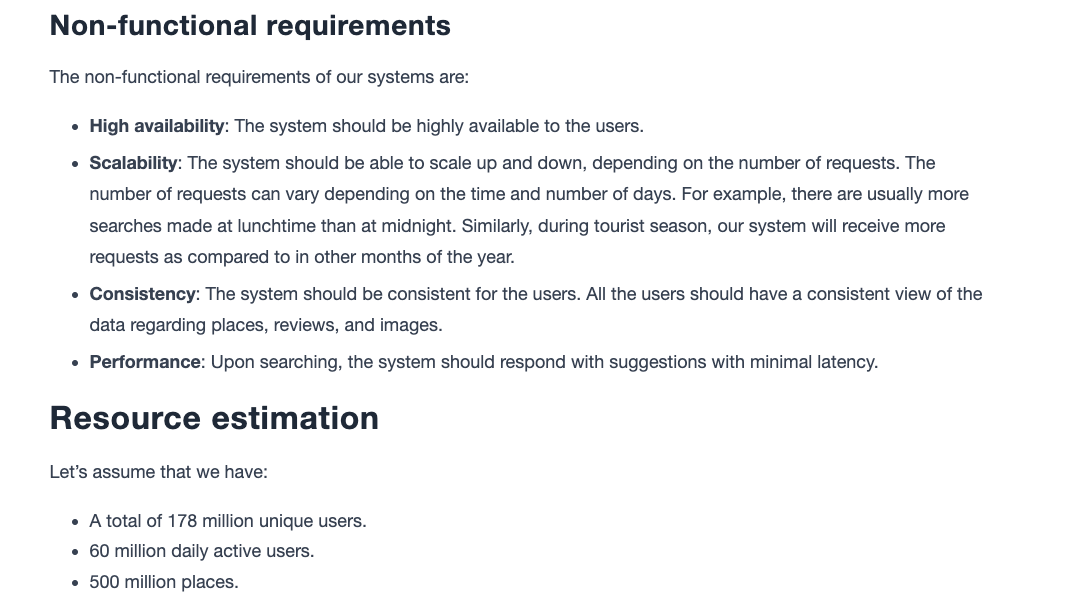
Requirements of Yelp’s Design
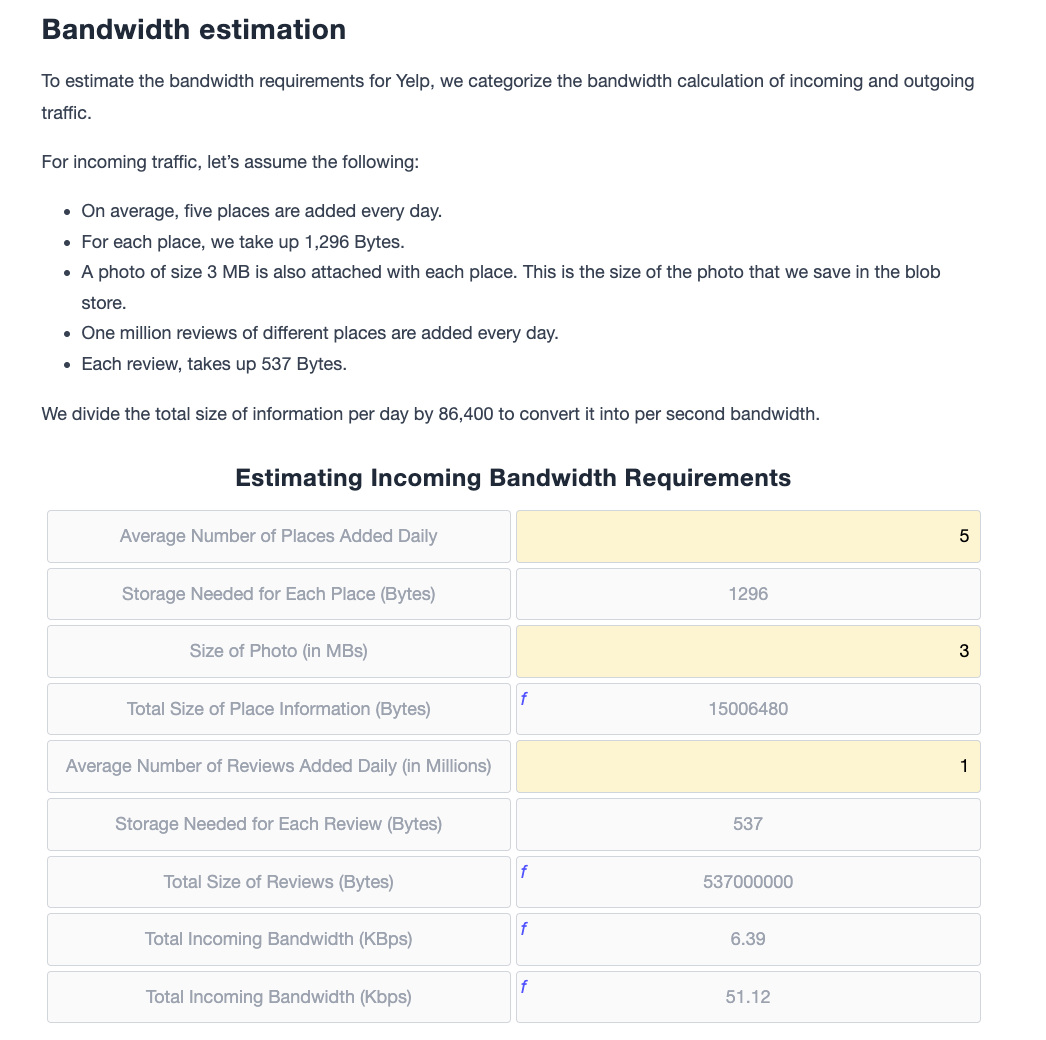
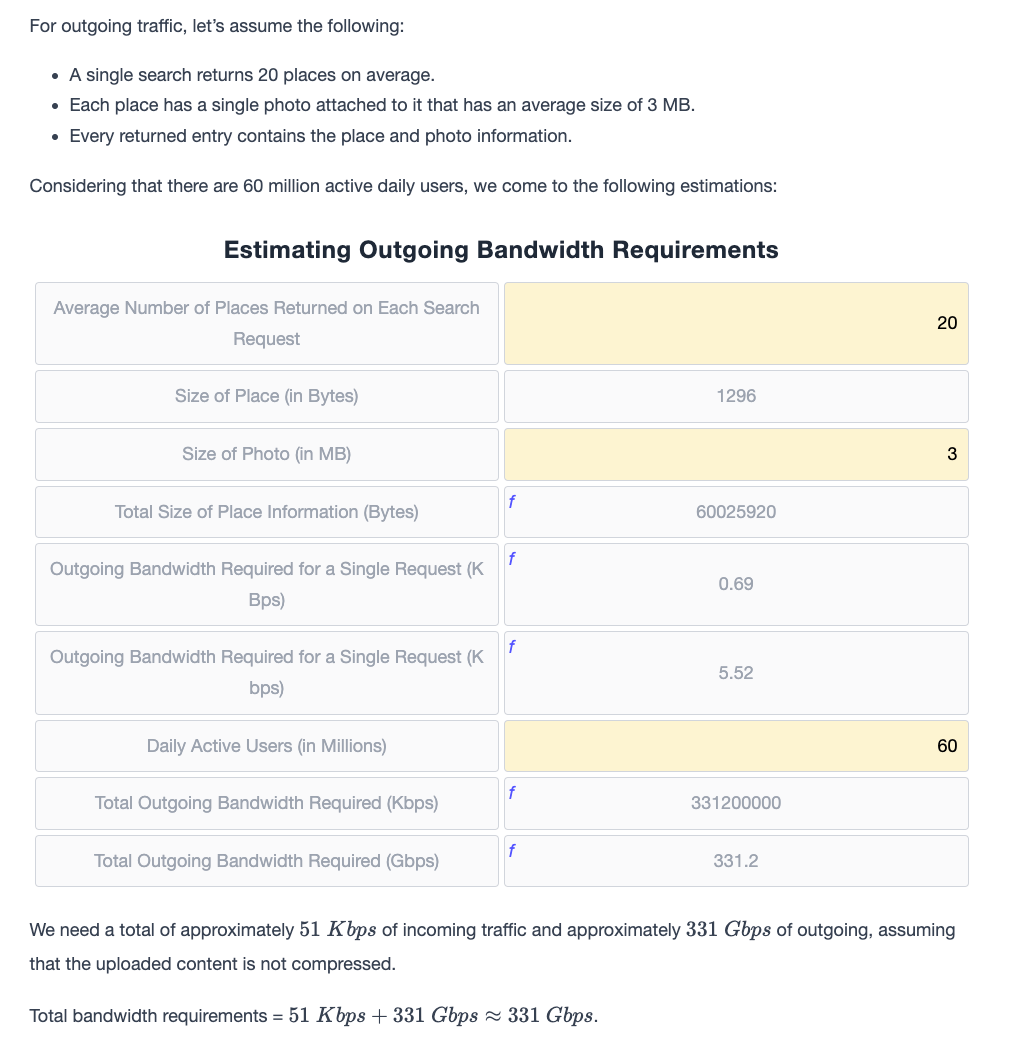
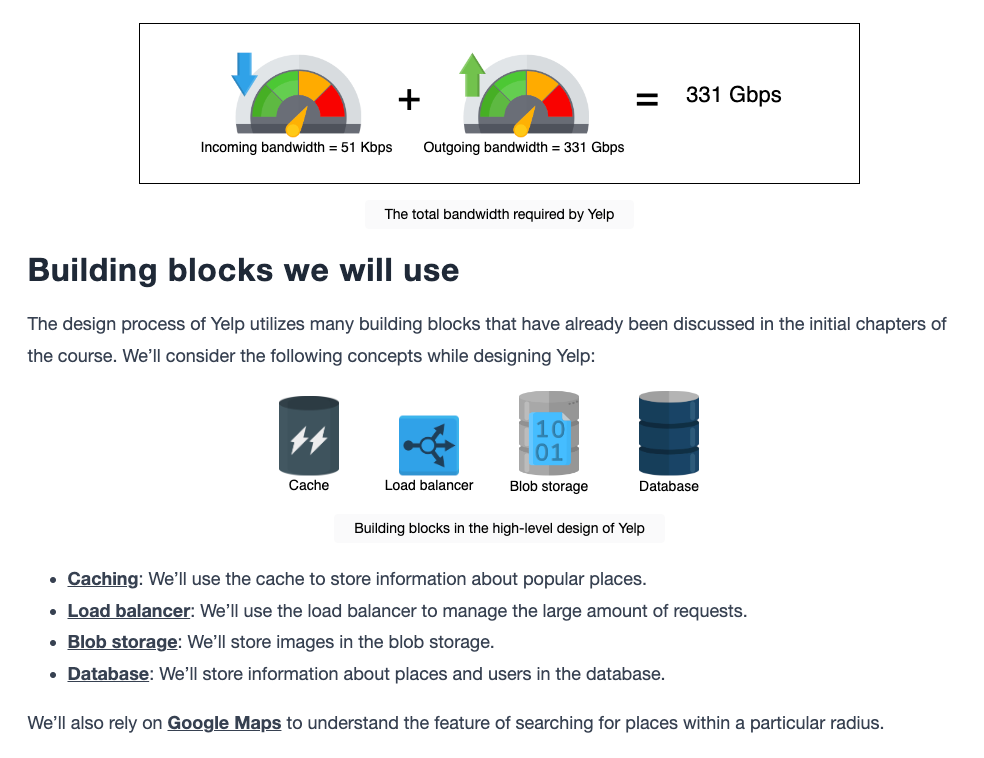
Design of Yelp
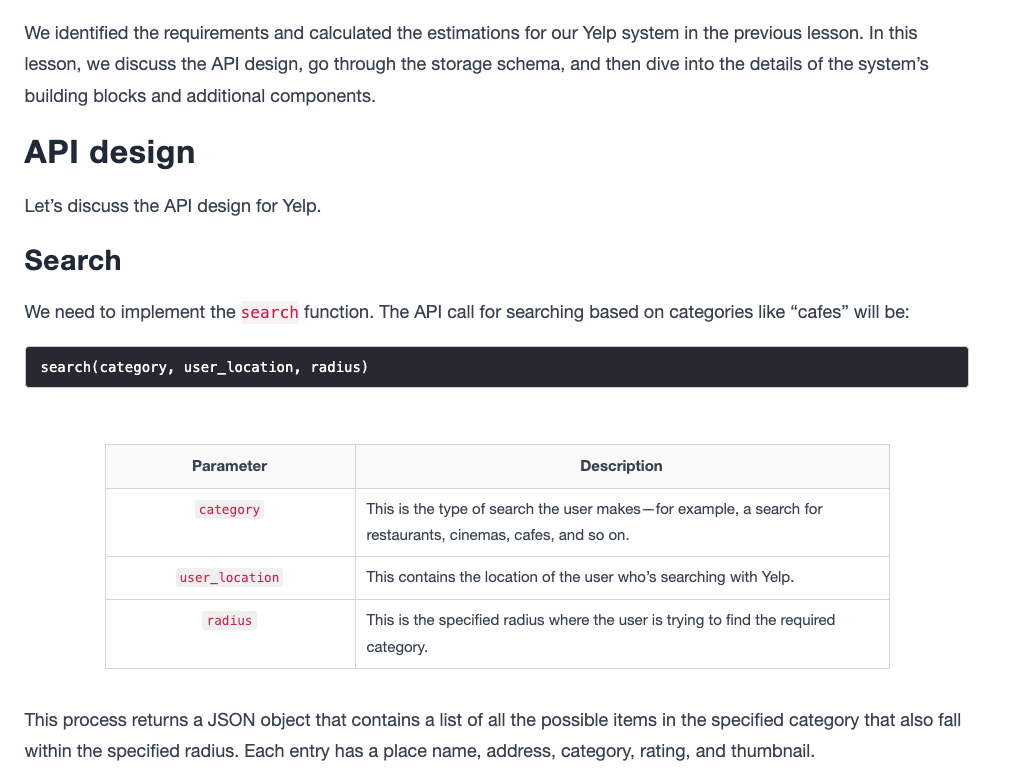
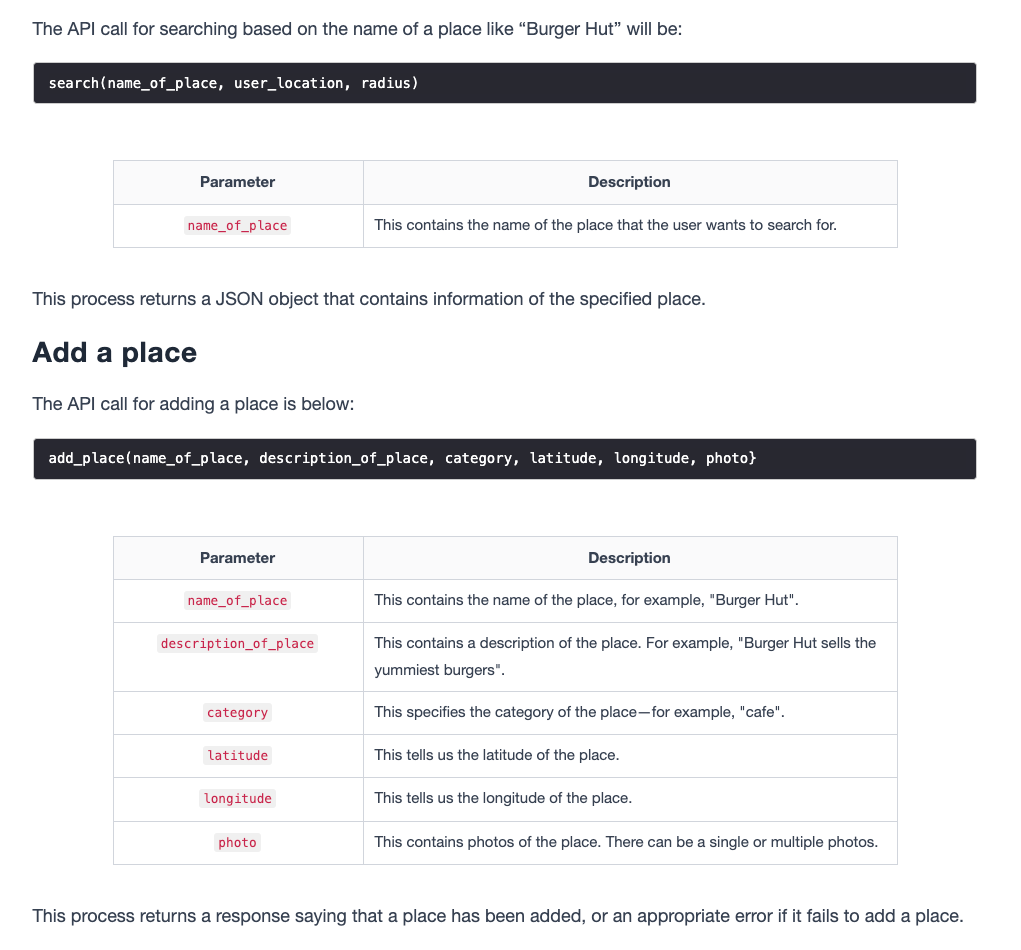
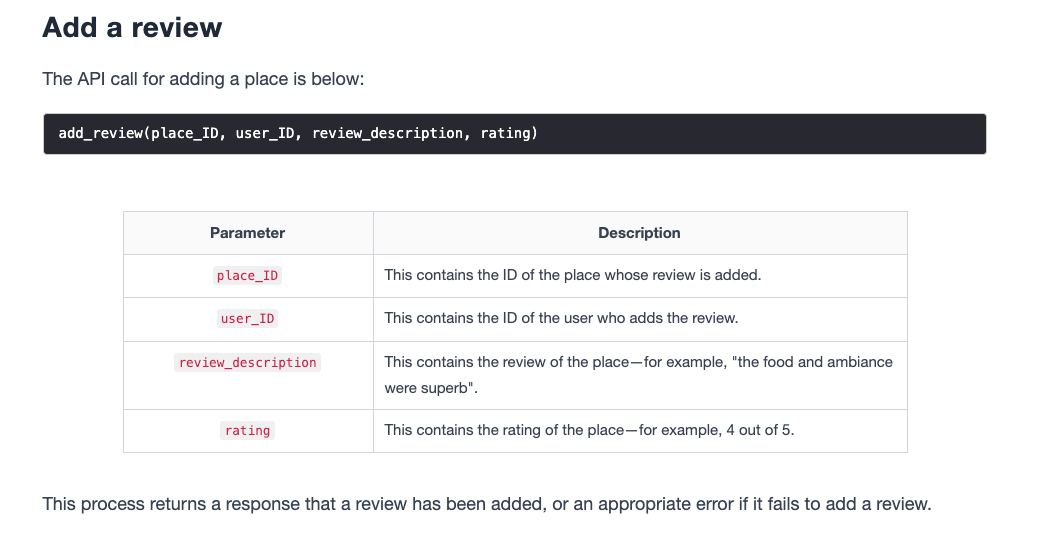
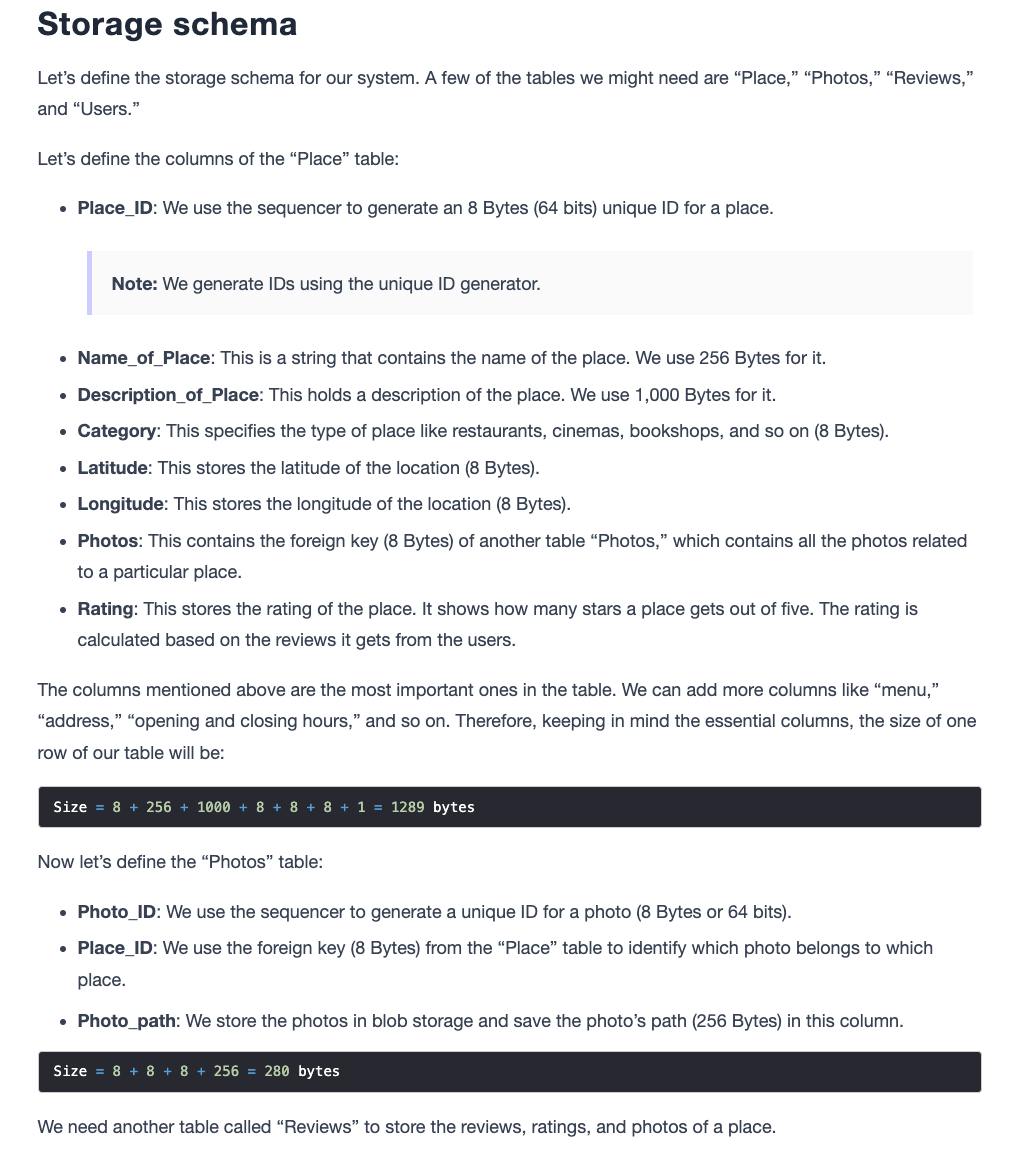
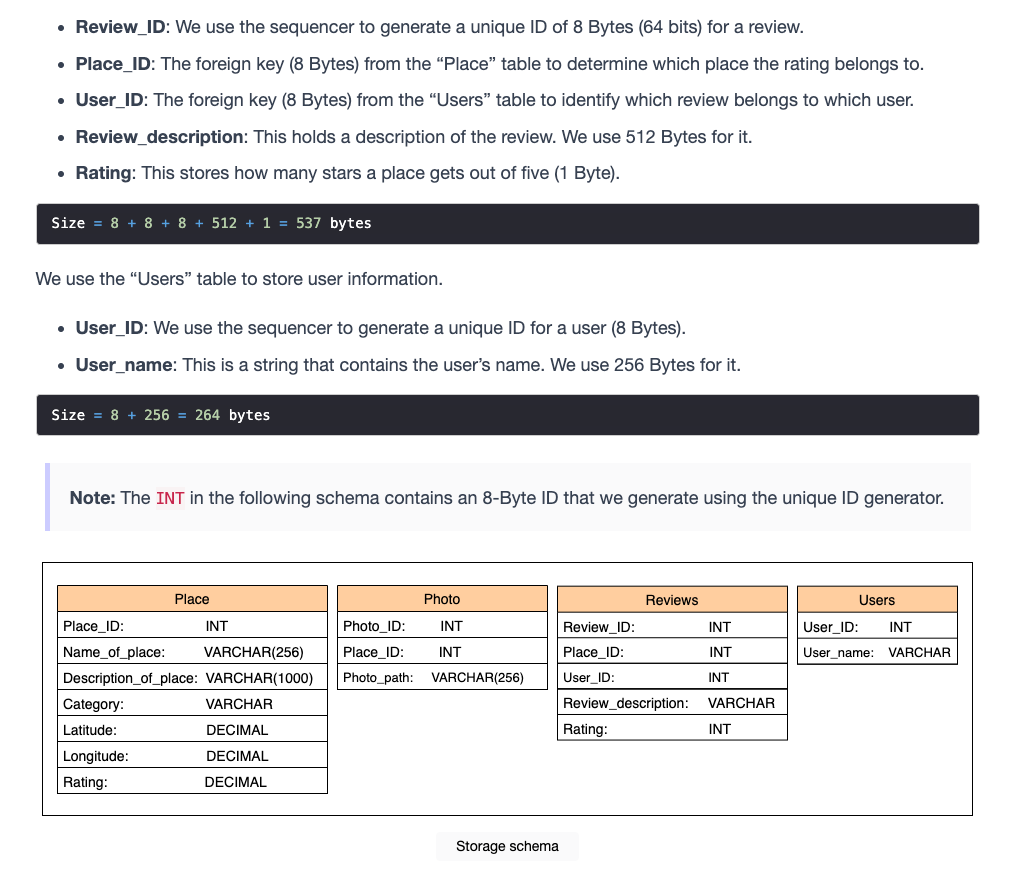
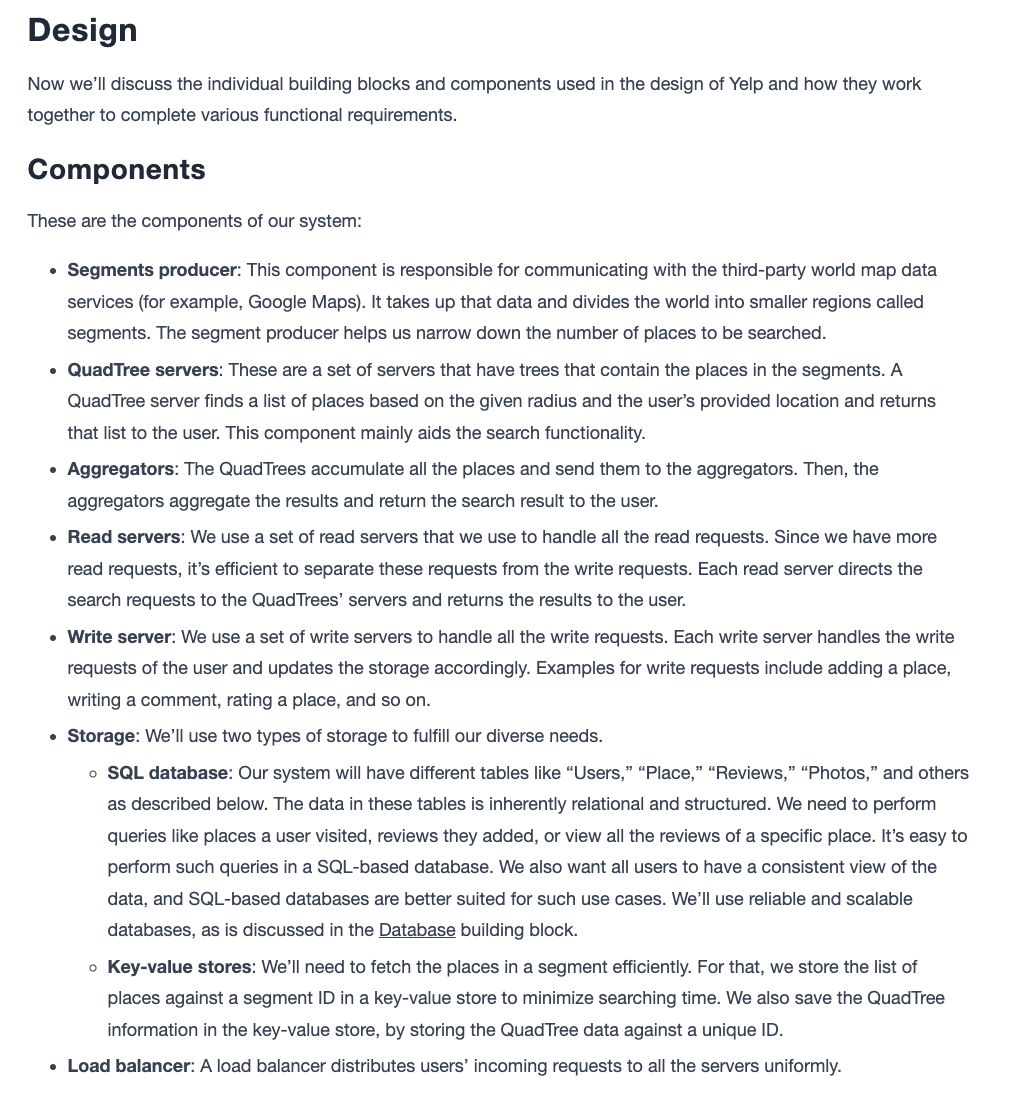
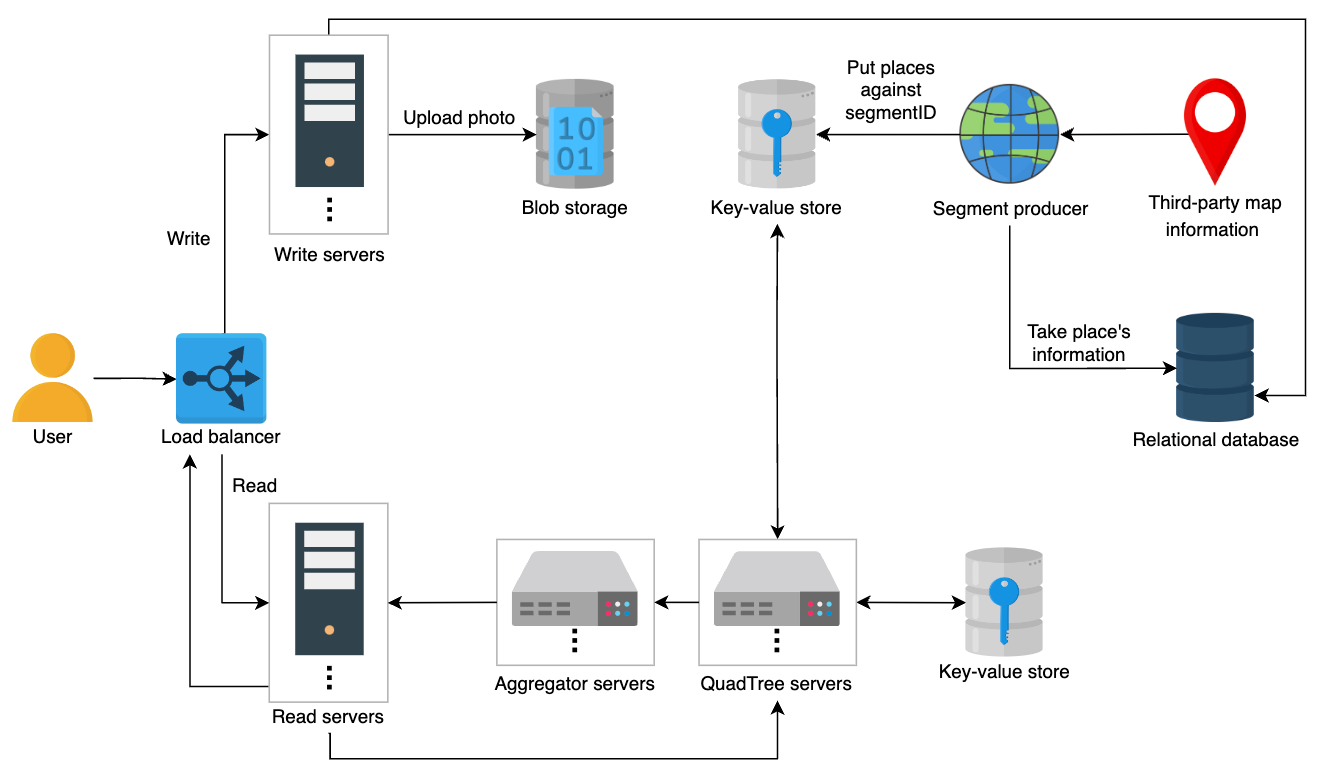
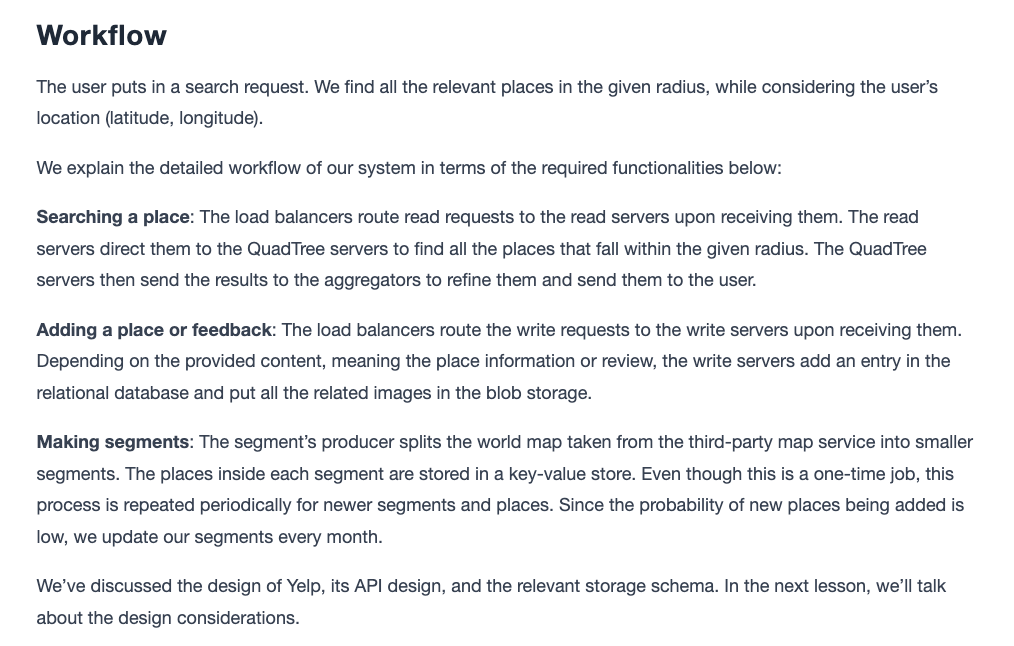
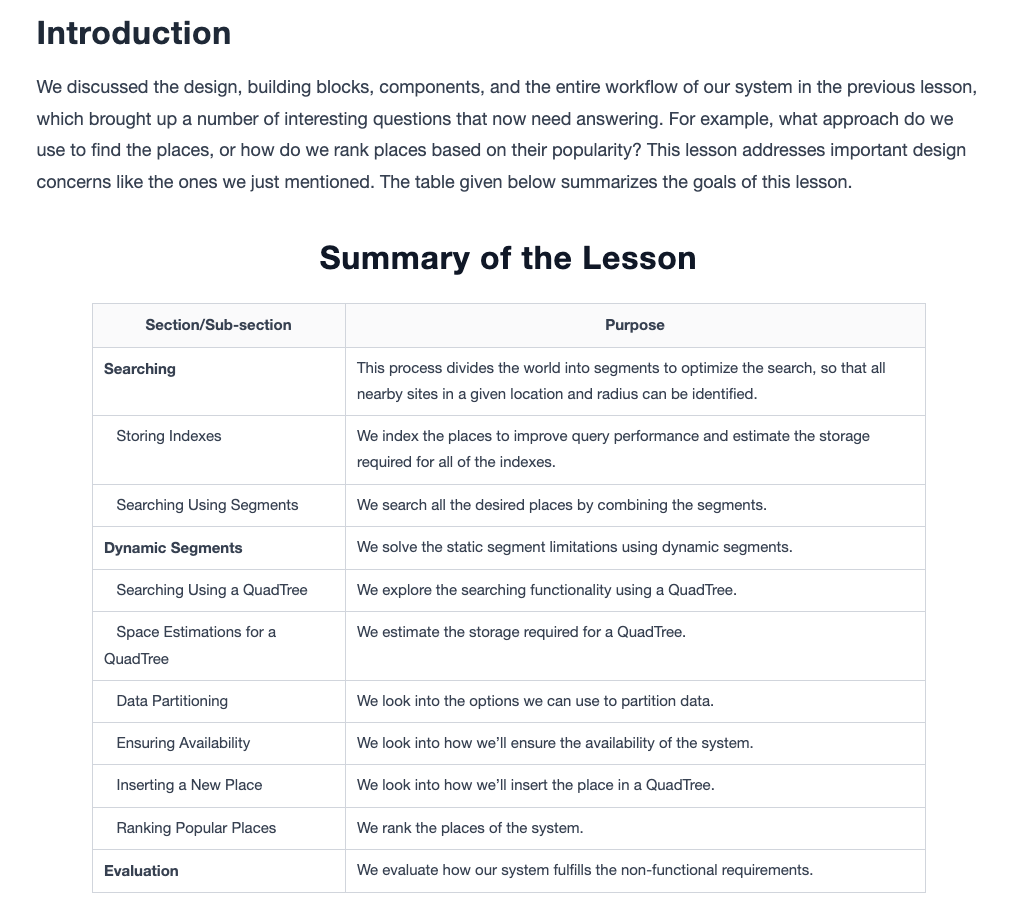
Design Considerations of Yelp
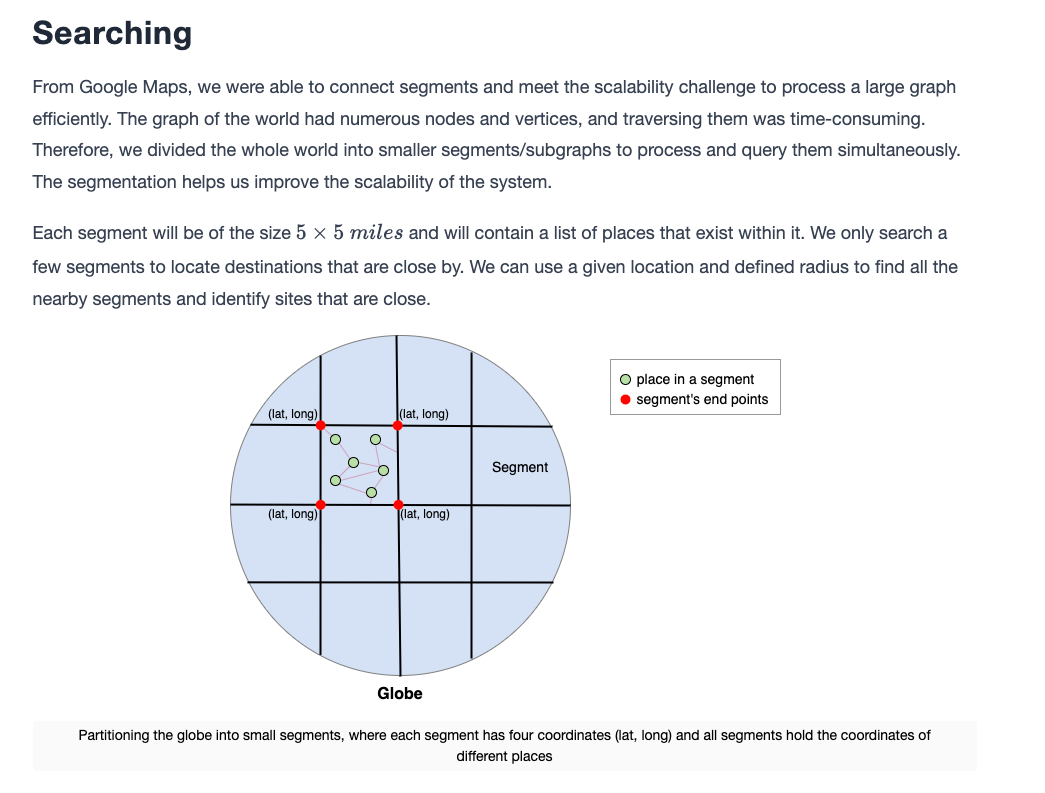
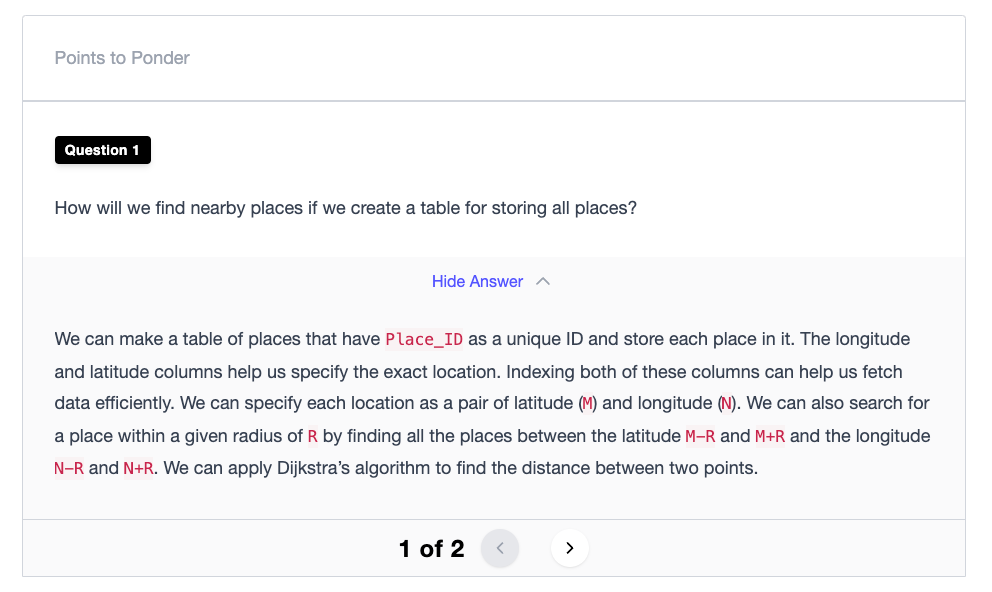
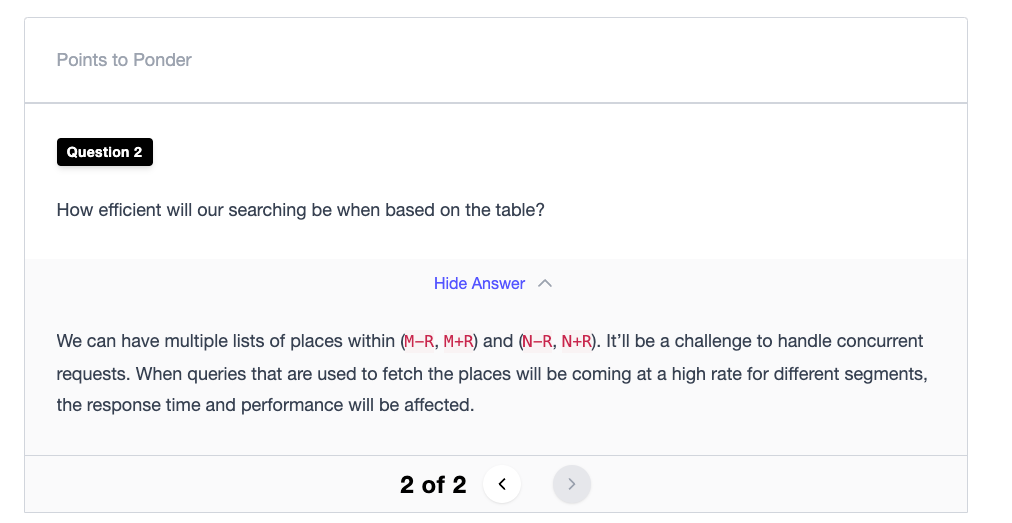
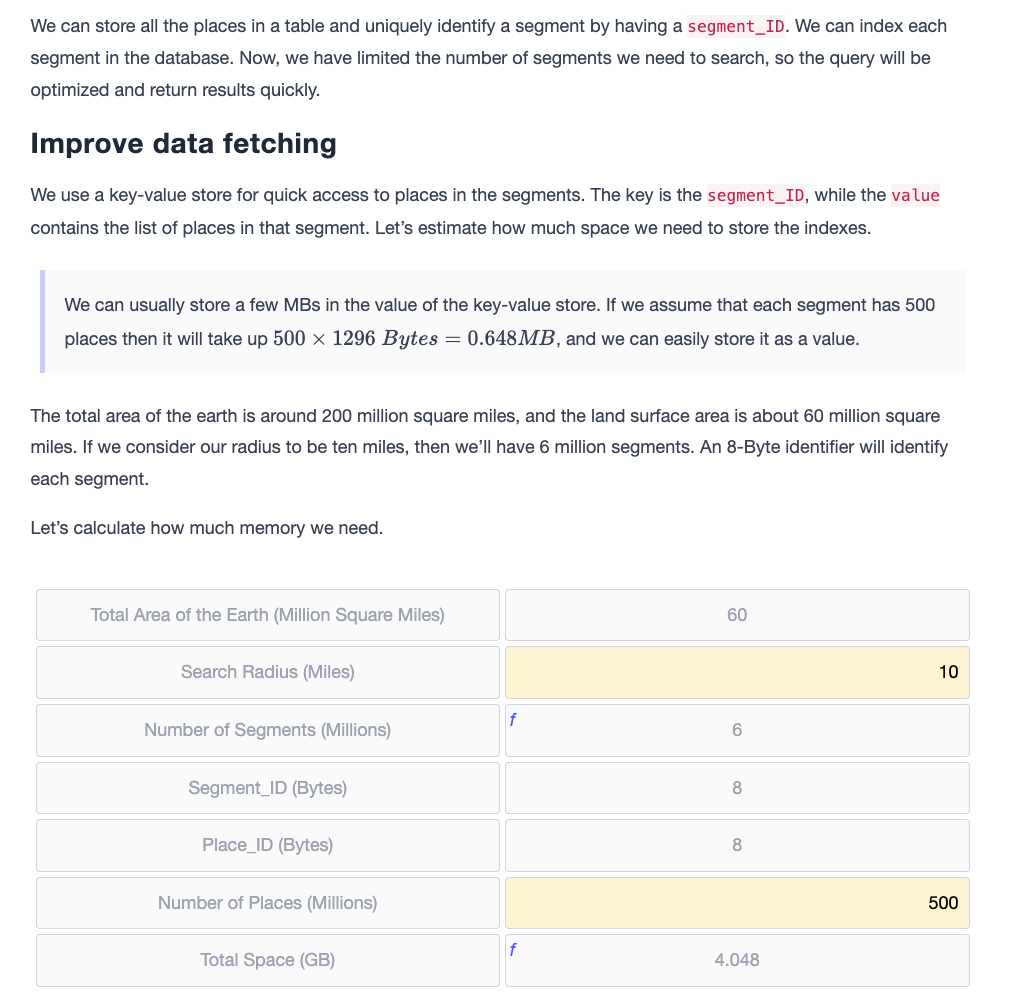
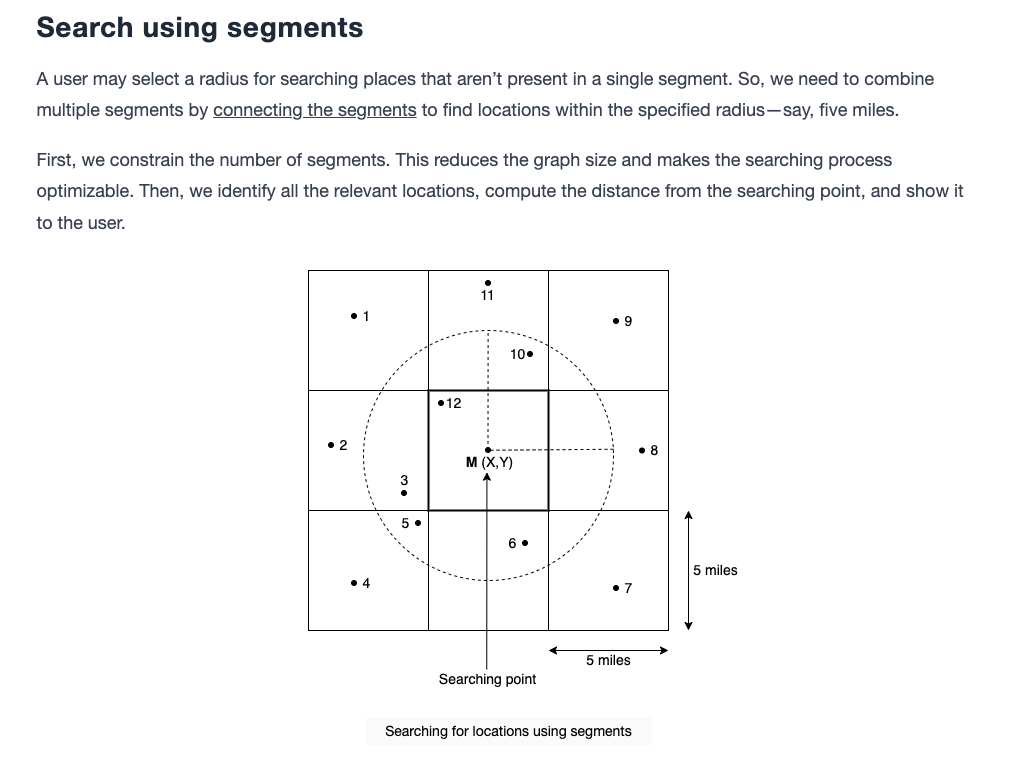
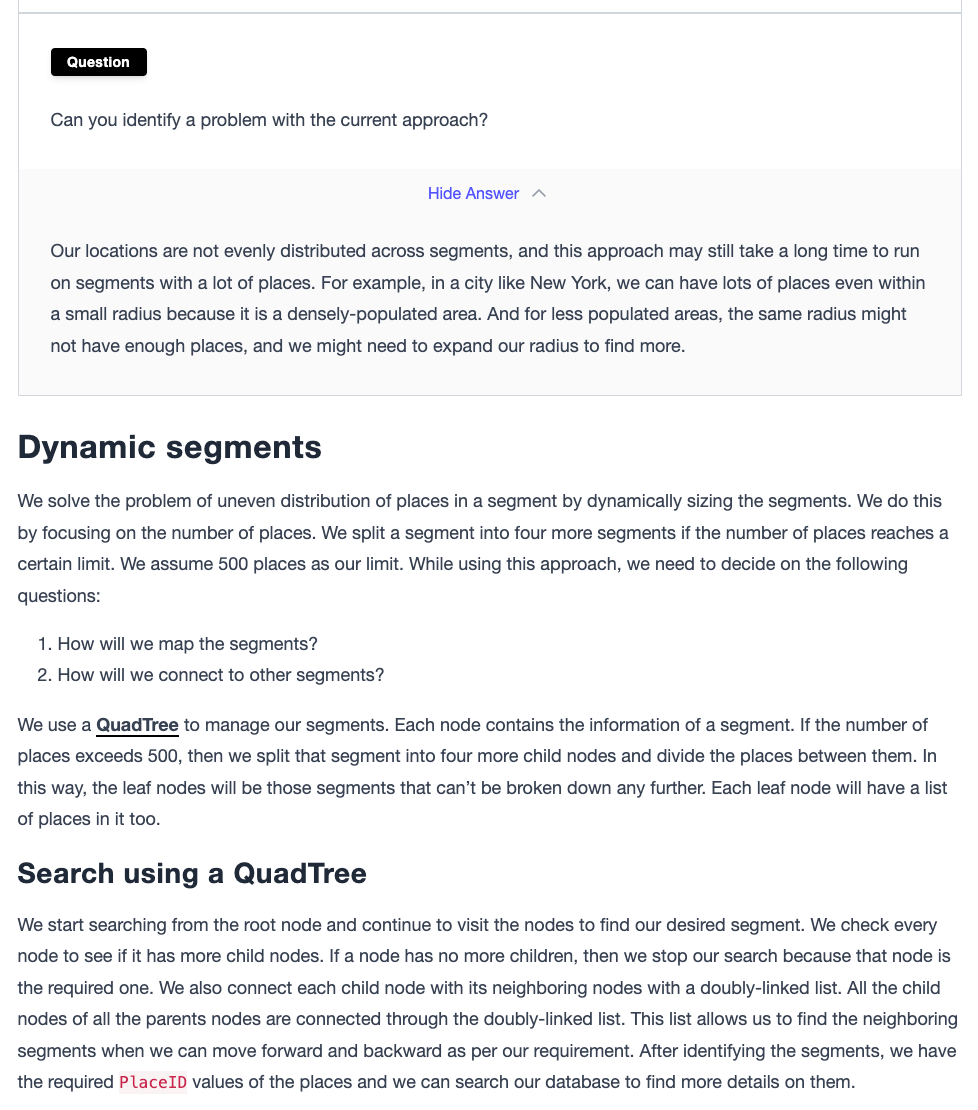
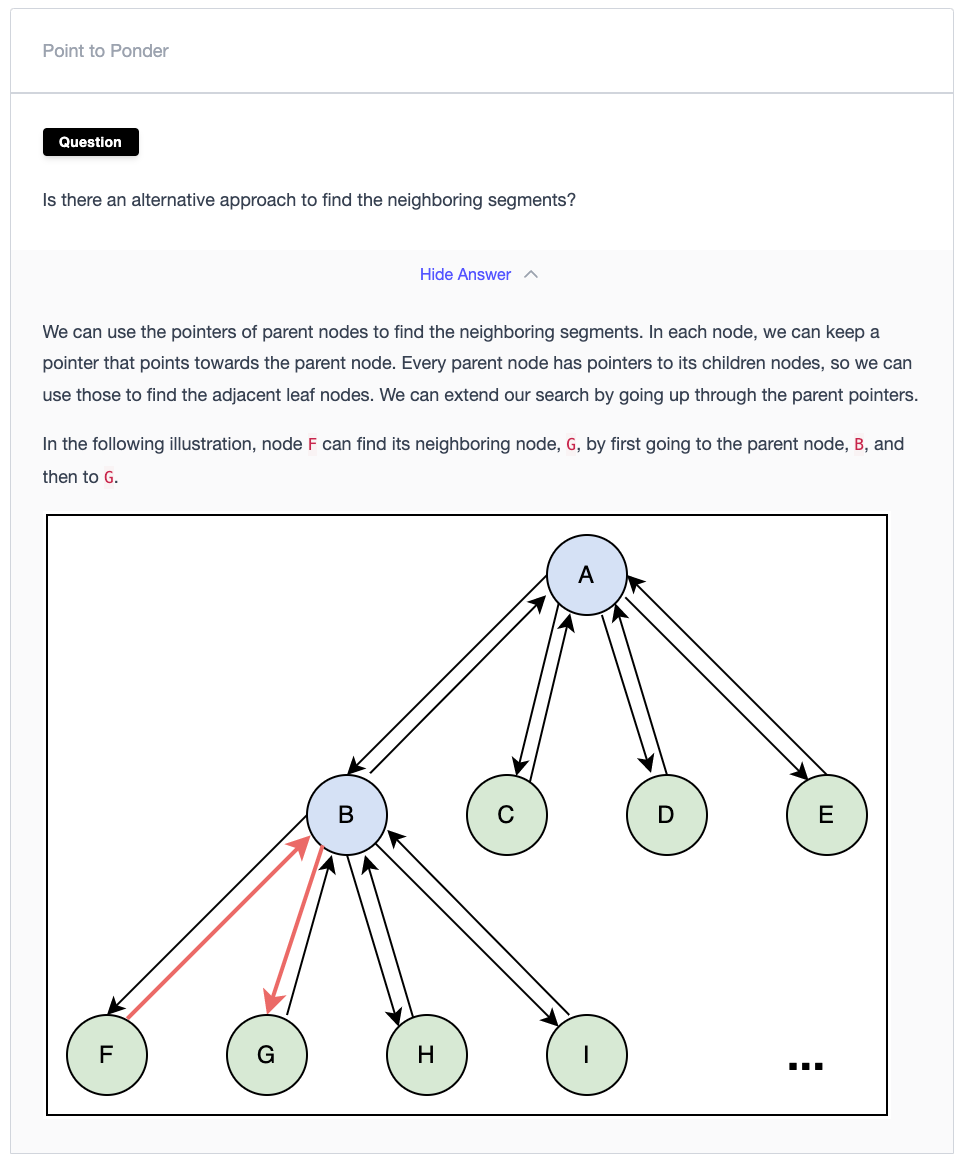

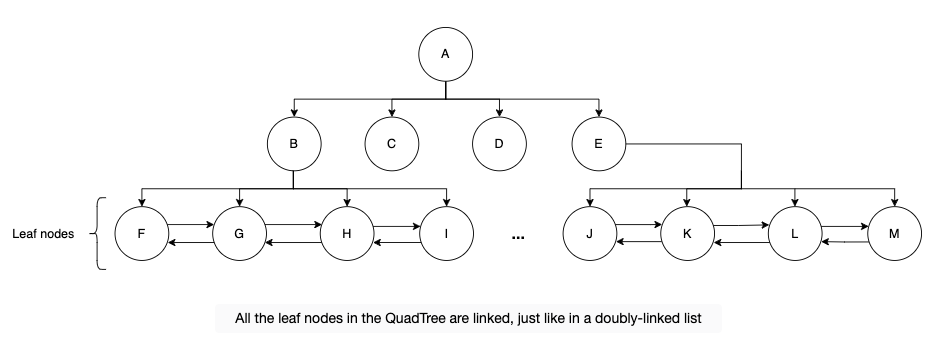
Details
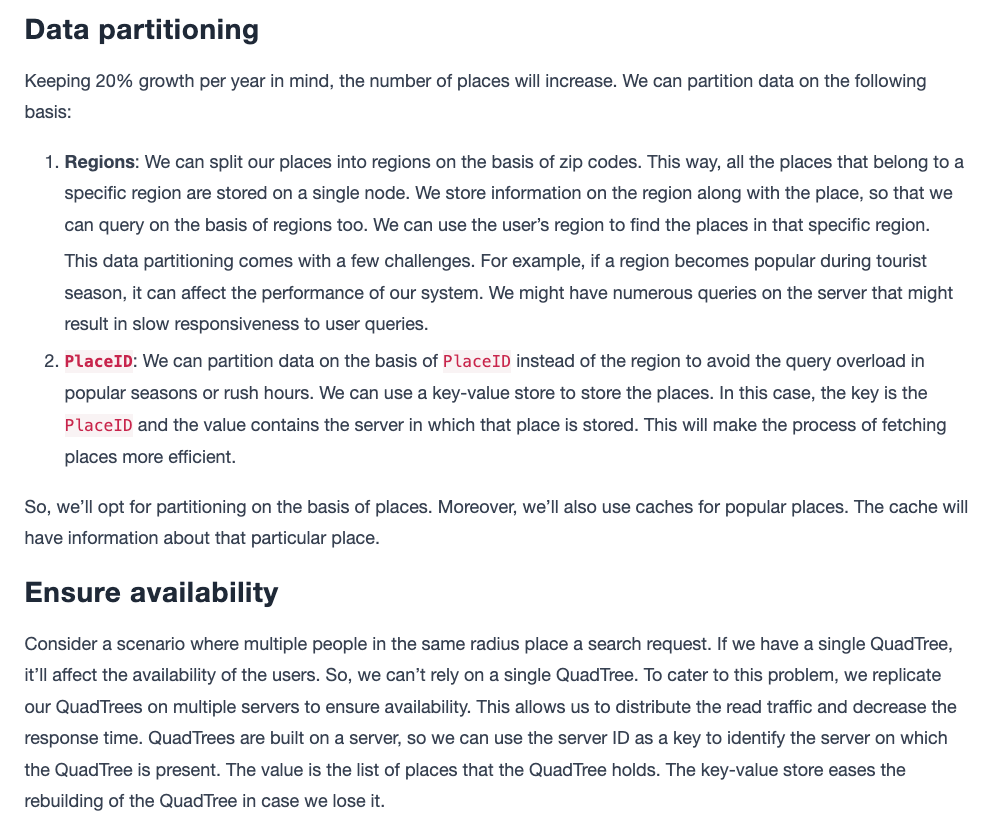
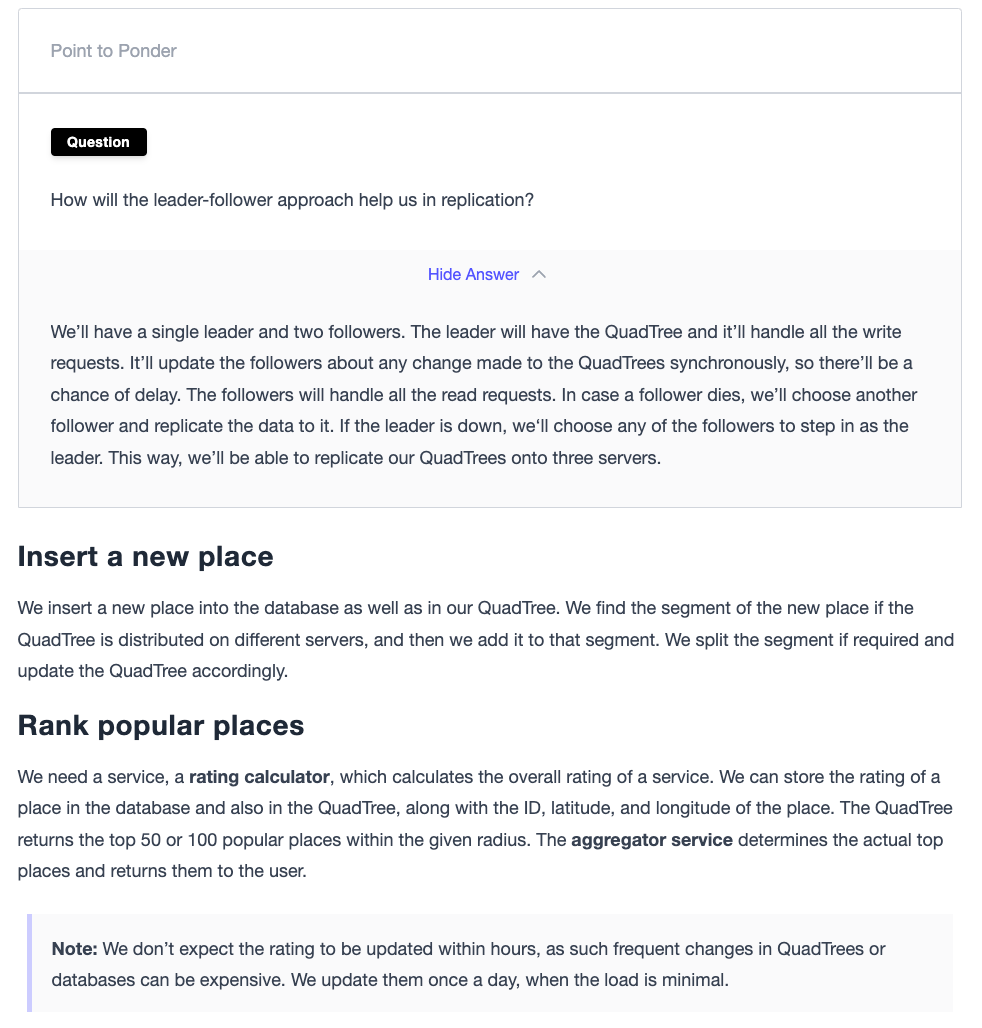
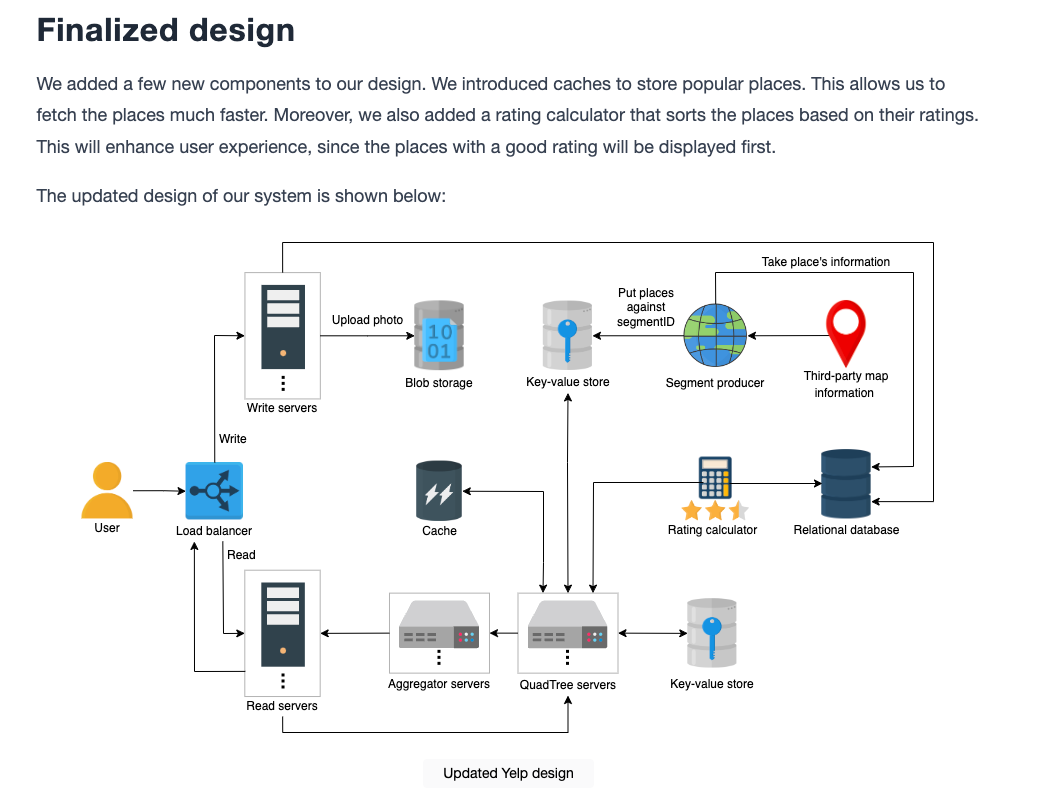
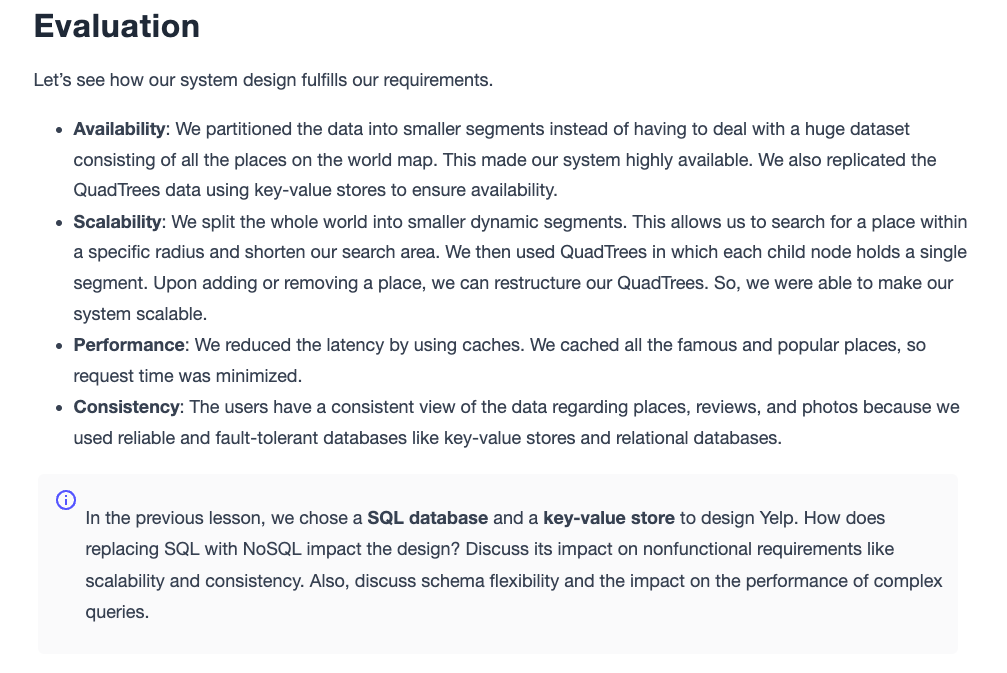
Replacing SQL with NoSQL in the Yelp design problem affects several aspects of the system’s design, particularly non-functional requirements like scalability and consistency, as well as schema flexibility and the performance of complex queries.
Scalability: NoSQL databases excel in scalability, offering the ability to scale out horizontally. This is crucial for handling large volumes of data and high traffic loads efficiently, which is beneficial for a system like Yelp that deals with vast amounts of user-generated content and queries.
Consistency: NoSQL databases often prioritize availability and partition tolerance, adhering to the eventual consistency model. This means that for a period, the data might not be consistent across all nodes, which could lead to users seeing slightly outdated information. This contrasts with SQL databases, which are better suited for scenarios where a consistent view of the data is critical.
Schema Flexibility: NoSQL databases provide schema flexibility, allowing for dynamic data models without the need for predefined schemas. This is advantageous for Yelp, where the data structure might evolve over time, such as adding new types of information about places or reviews.
Performance of Complex Queries: While NoSQL databases are highly efficient for certain types of queries, especially when dealing with key-value pairs, they may not perform as well as SQL databases for complex queries. SQL databases are designed to support complex data analysis and reporting, which could be essential for generating insights from Yelp’s data, such as finding all reviews of a specific place or places a user visited.
In summary, the choice between SQL and NoSQL for the Yelp design problem involves trade-offs between scalability, consistency, schema flexibility, and the ability to perform complex queries.