Web Crawler
What is Web Crawler?
Requirements of a Web Crawler's Design
Where do we get these seed URLs from?
Why are good quality seed URLs important and what happens if the seed quality is not good?

How do we select seed URLs for crawling?
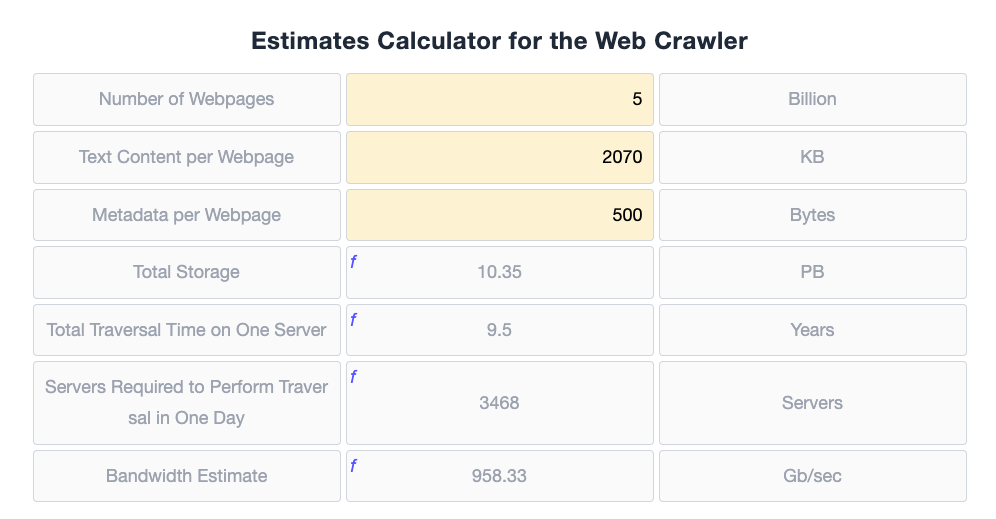
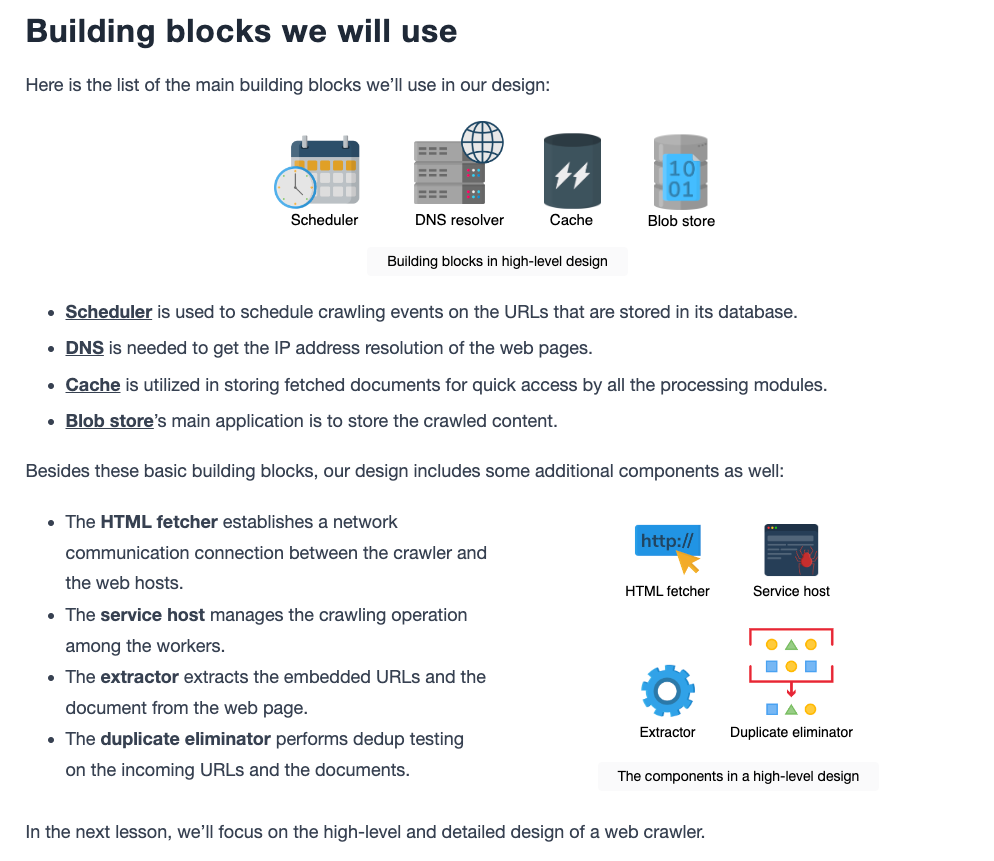
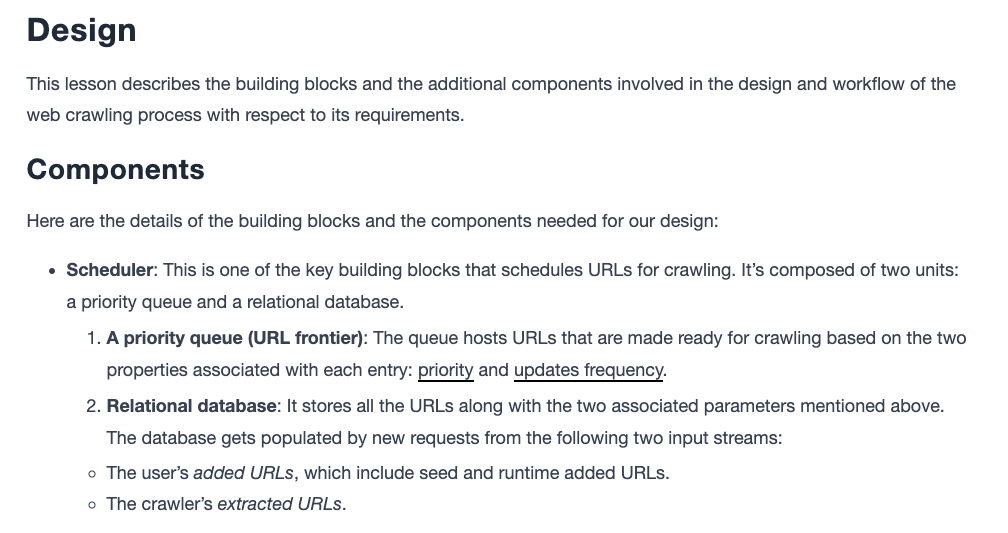
Design of a Web Crawler
Can we estimate the size of the priority queue? What are the pros and cons of a centralized and distributed priority queue.
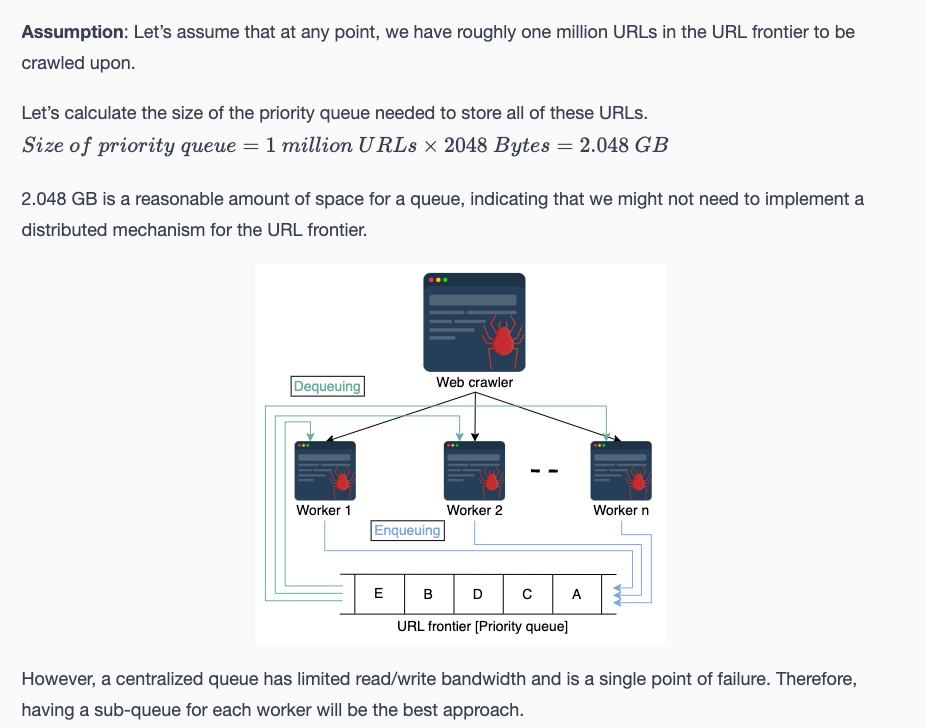
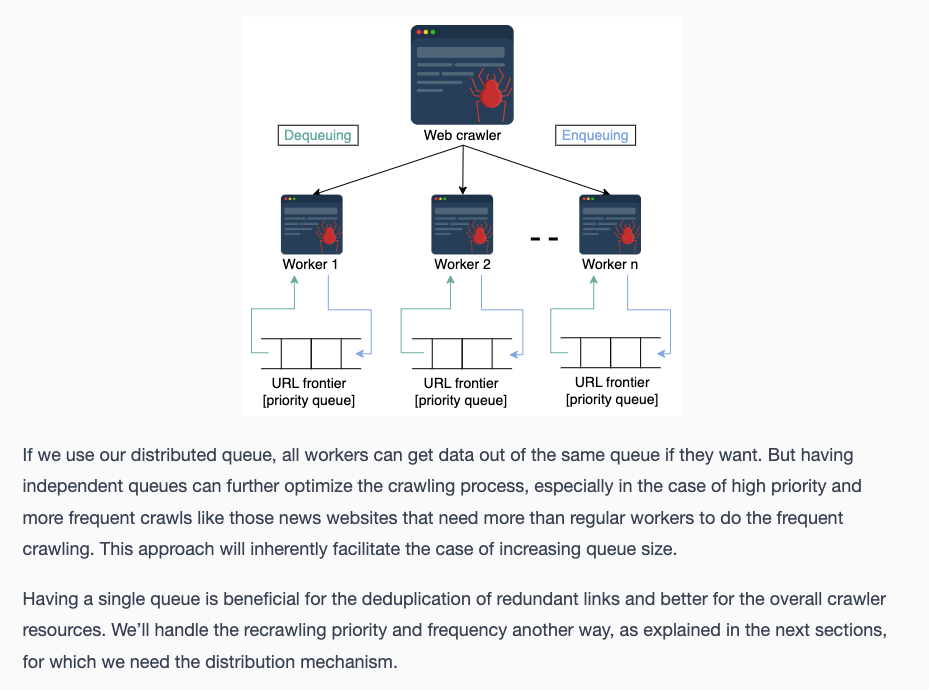
How will we distribute the URL frontier among different workers and what purpose will this serve?
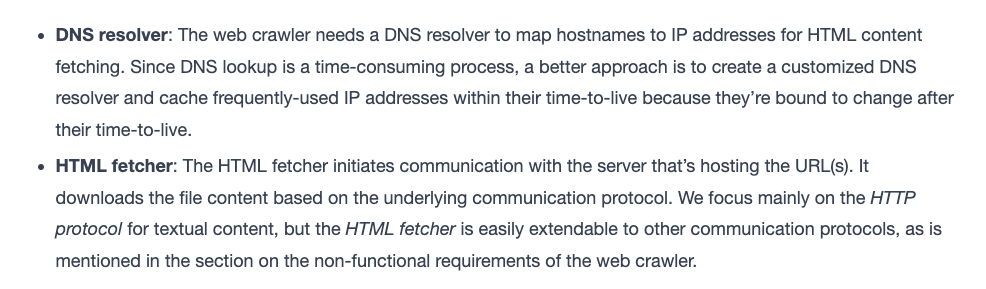
How does the crawler handle URLs with variable priorities?
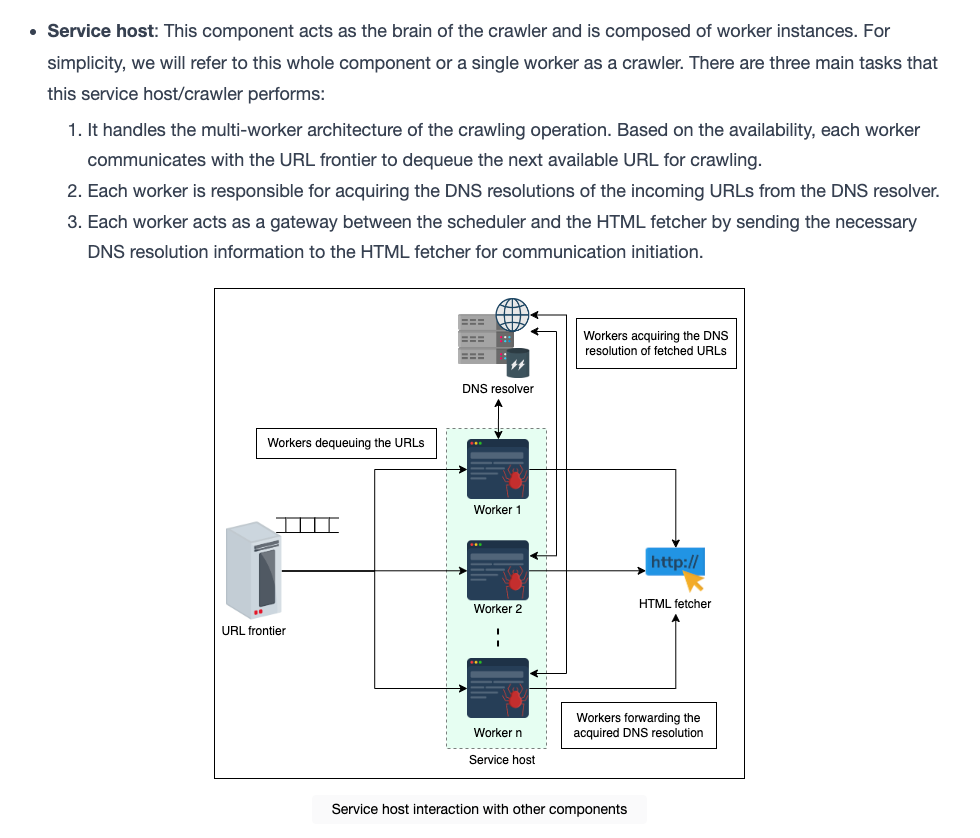
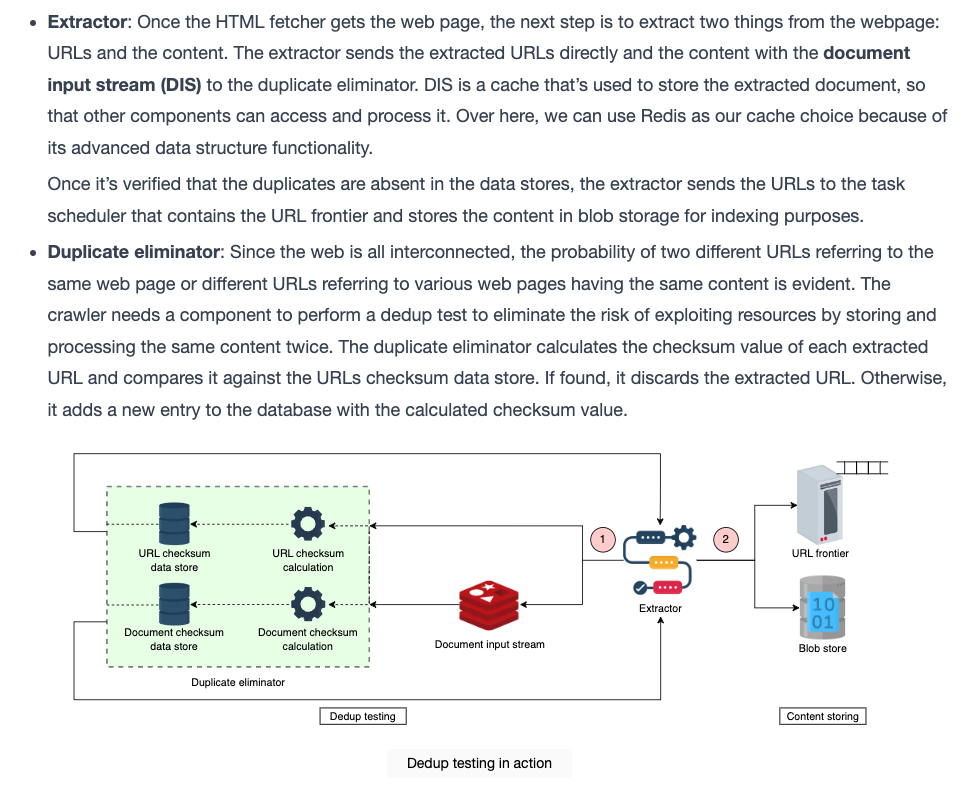
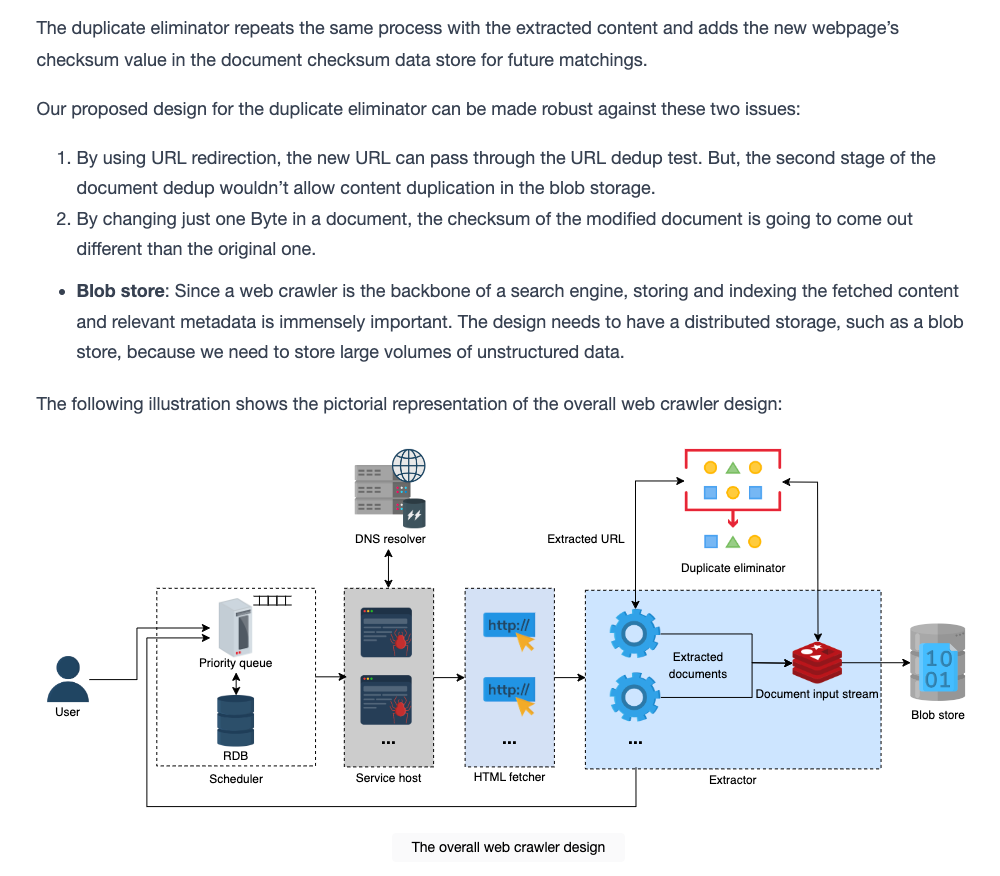
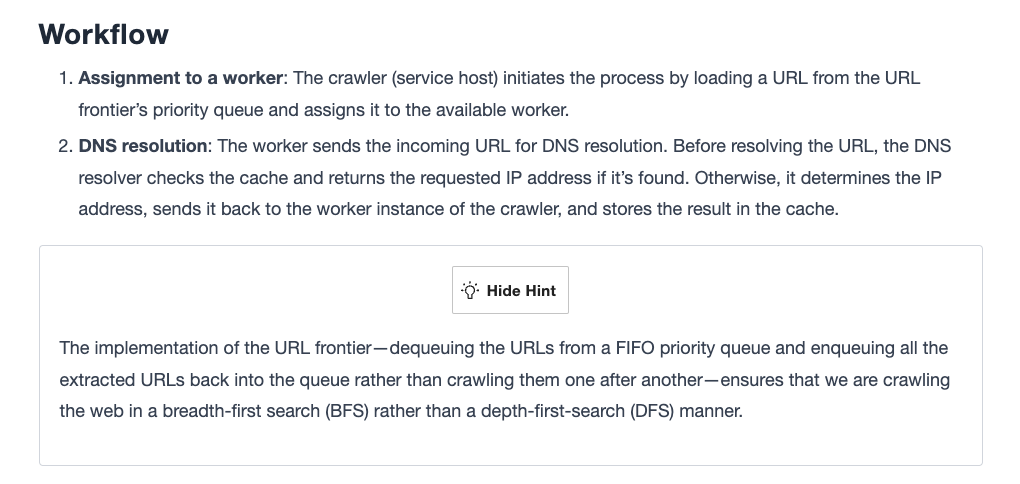
Can we use DFS instead of BFS?

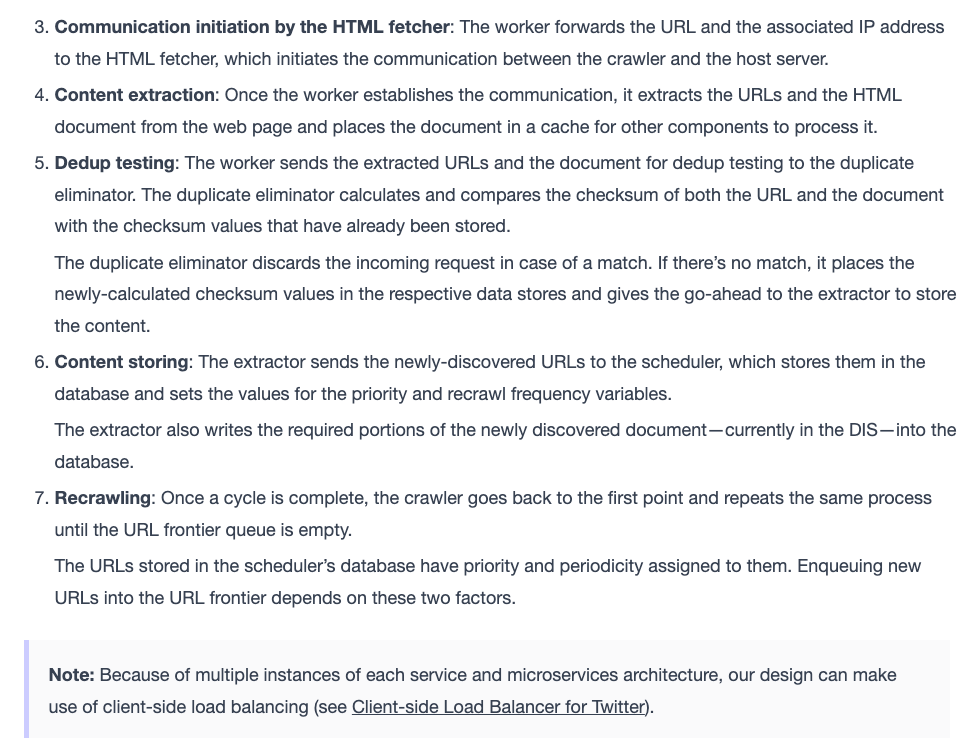
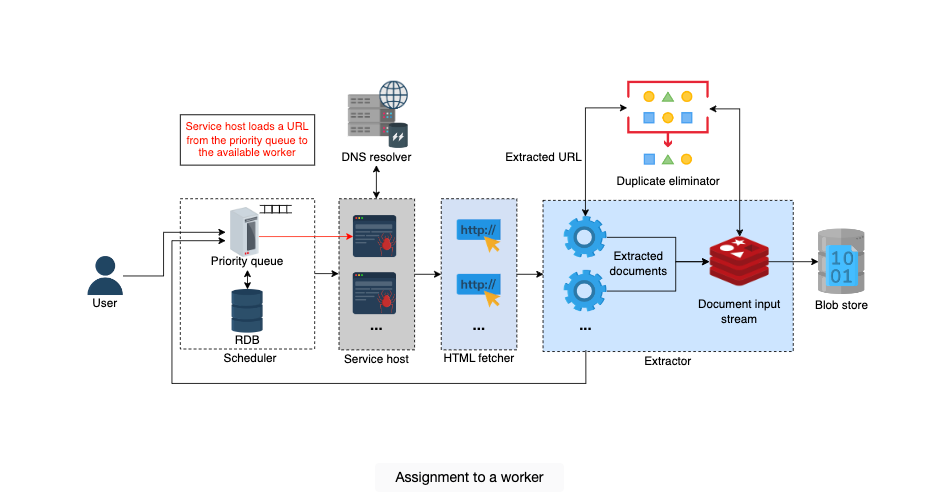
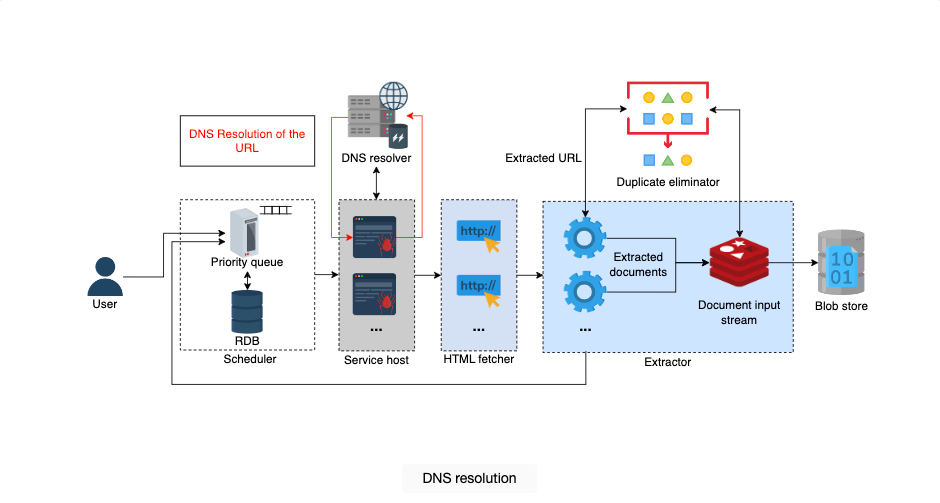
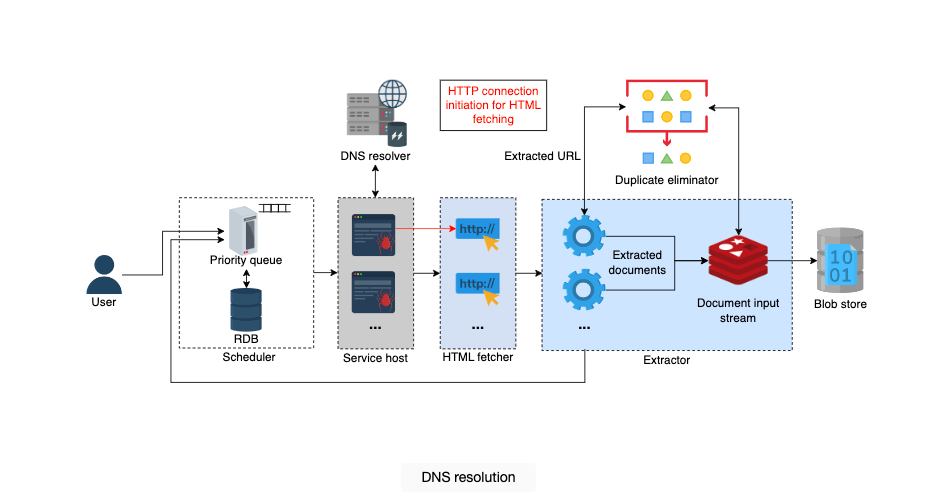
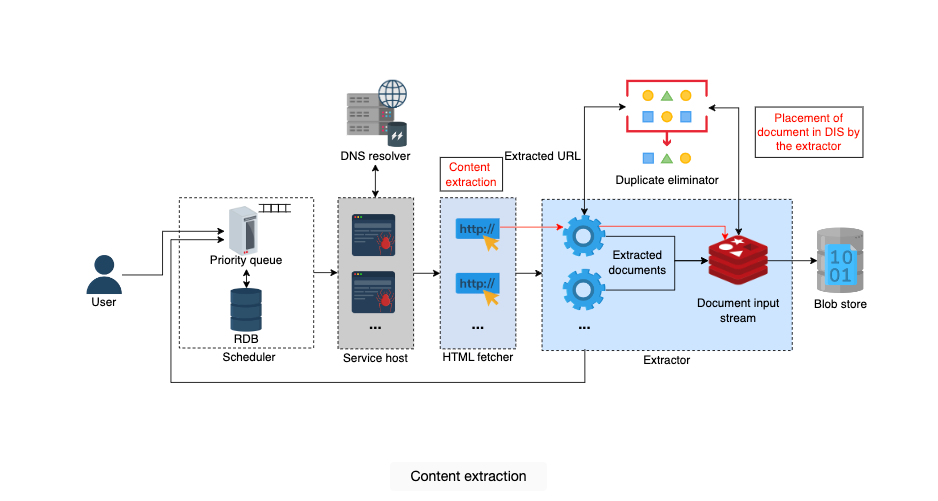
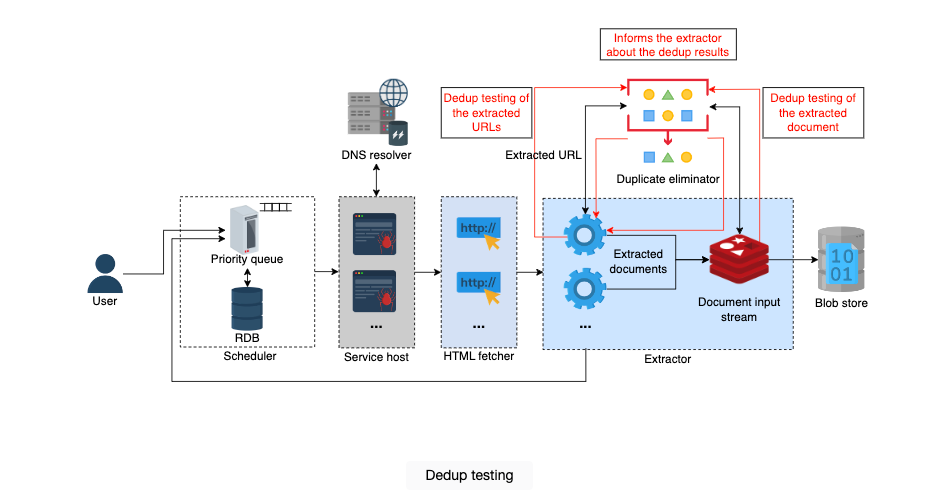
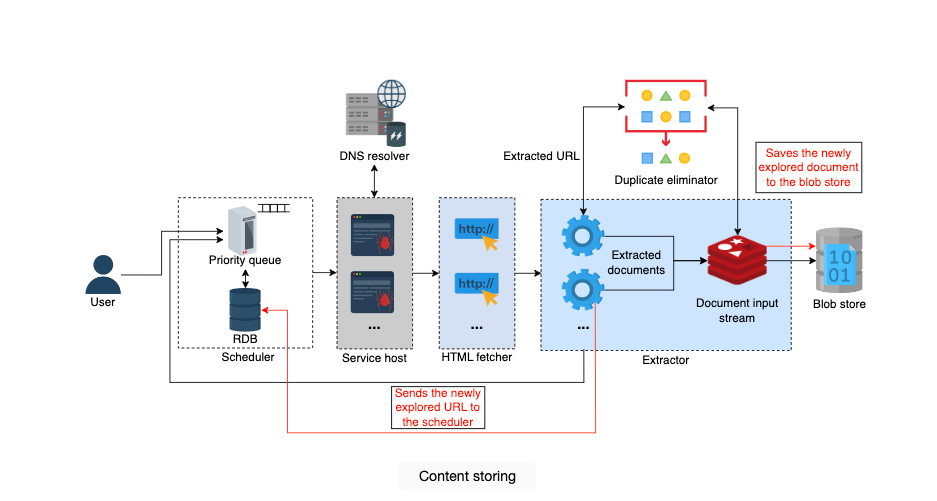
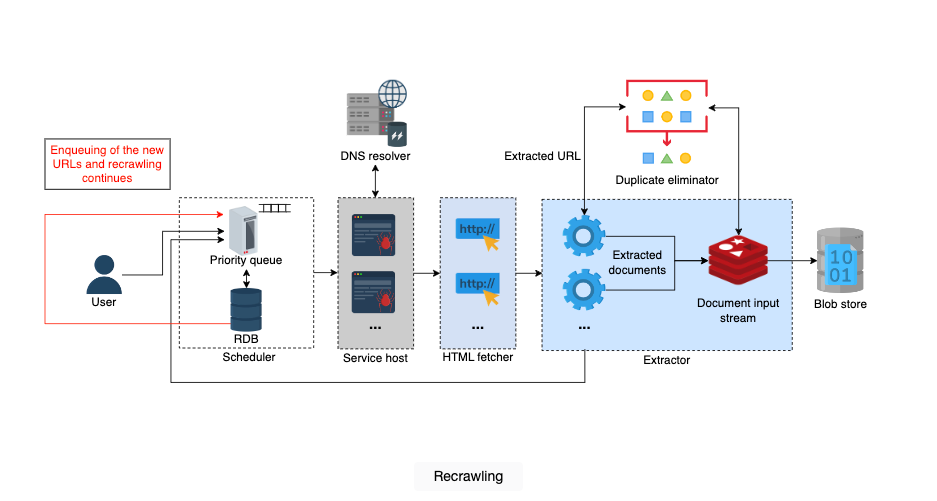
Details
Recrawling is essential to ensure the freshness of indexed pages, reflecting updated content on websites. The decision to re-crawl is based on factors such as content frequency, relevance, and the importance of timely information. Regular recrawling is determined by changes in content, enabling search engines to provide users with the latest and most relevant results.
Design Improvements of a Web Crawler
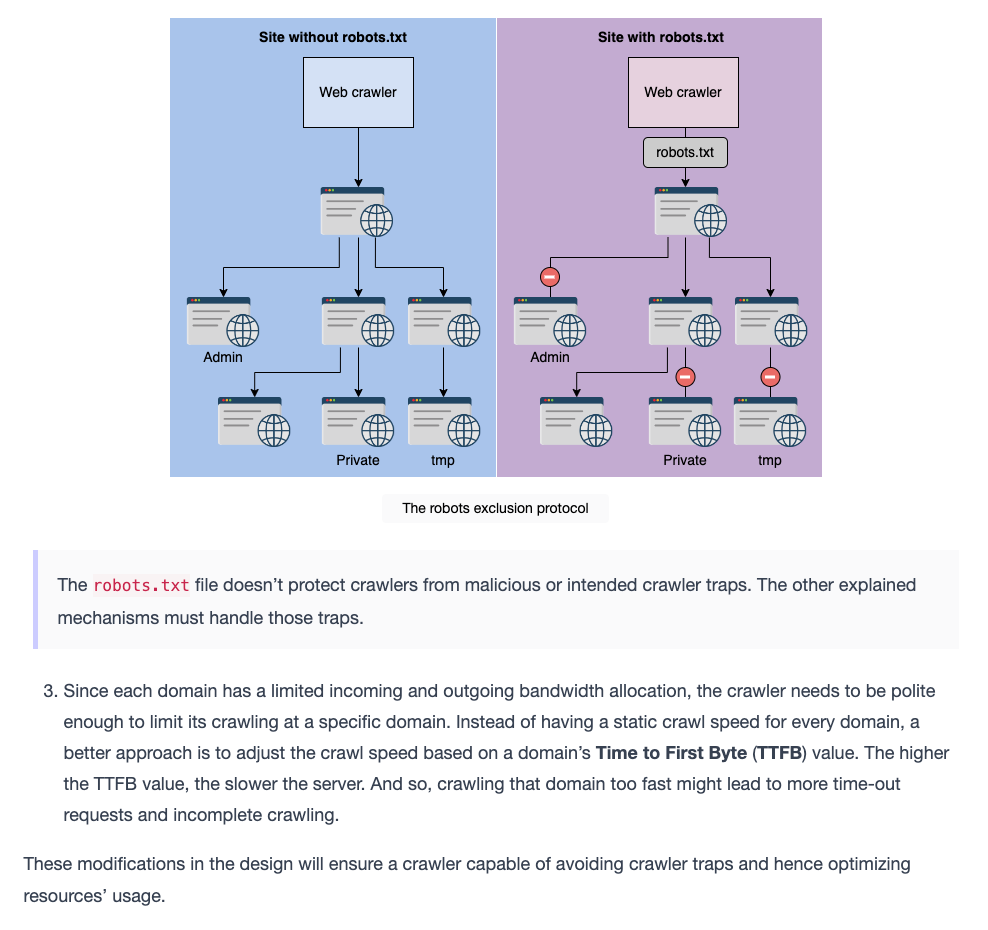
Evaluation of Web Crawler's Design
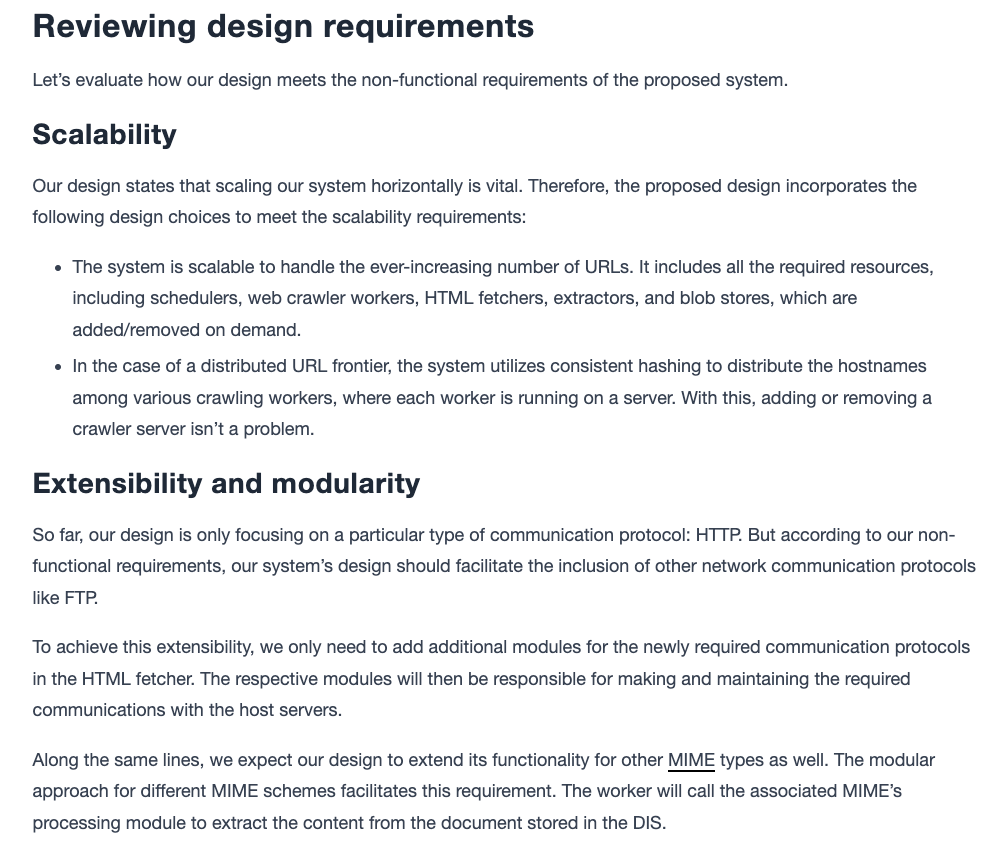
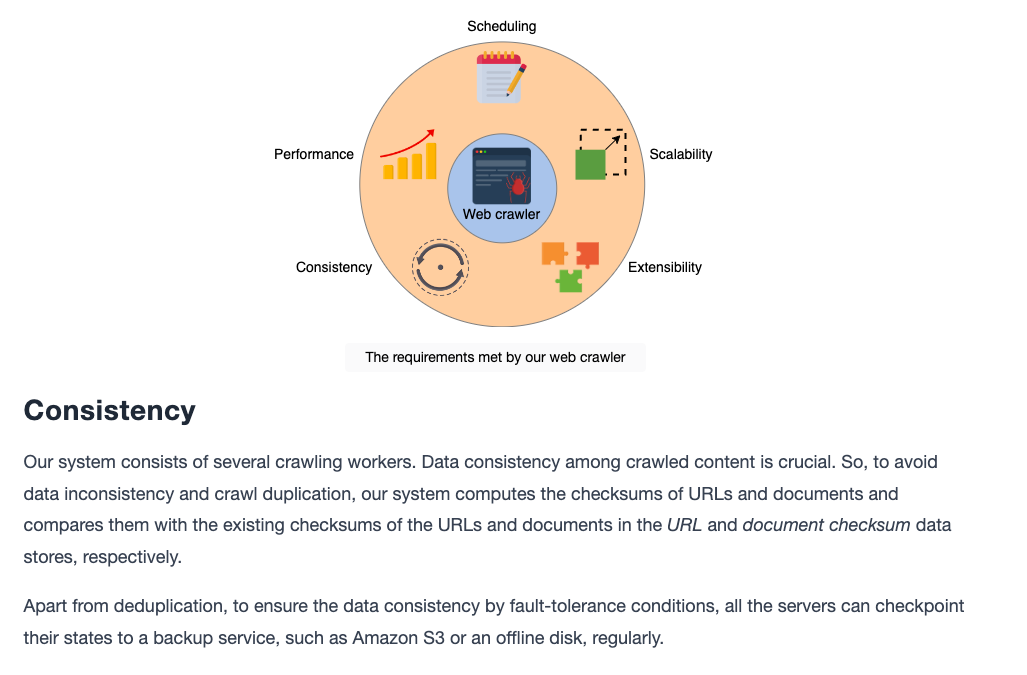
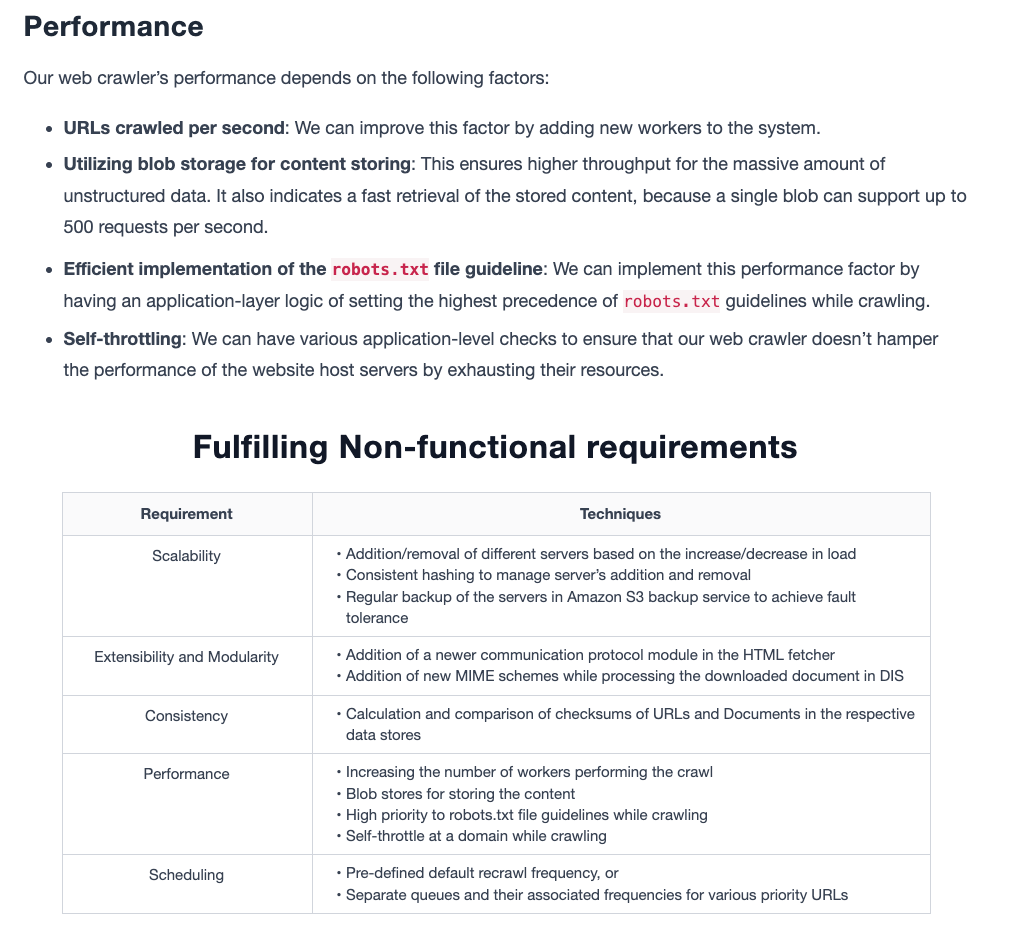
Details
Immediate actions to handle IP blocking issues during frequent crawls for a real-time news aggregation platform include implementing IP rotation and utilizing proxy servers. IP rotation helps in changing the IP address regularly, making it difficult for the target server to block the crawler based on IP. Proxy servers act as intermediaries, allowing requests to be distributed from various IP addresses, which increases the difficulty for the target server to implement effective blocking. Continuous monitoring and adaptability to changes in blocking mechanisms are also crucial. This involves assessing the effectiveness of the current strategies and modifying them as needed. Additionally, employing anti-blocking measures like introducing delays between requests or using advanced techniques to obfuscate the crawler’s footprint can further help in avoiding blocks and ensuring continuous access to the latest content.